Gold Coast's Short-Term Rental Clampdown: How It Stacks Up Against Cities Fighting the Same Battle
From Surfers Paradise to Santorini, cities overrun by Airbnb listings are reaching for the same regulatory toolkit — with wildly different results.
From Surfers Paradise to Santorini, cities overrun by Airbnb listings are reaching for the same regulatory toolkit — with wildly different results.
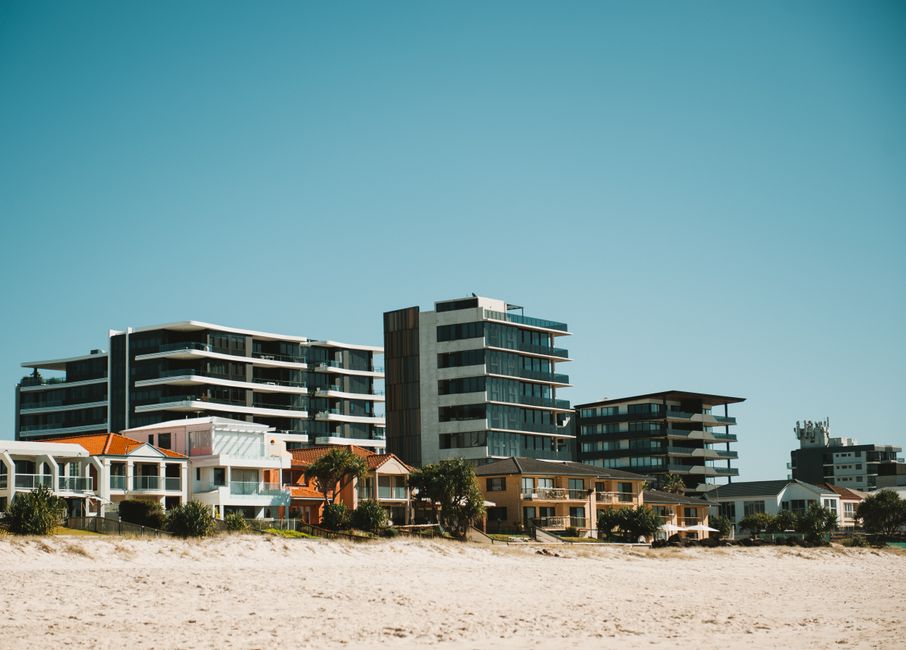
Gold Coast City Council confirmed last month it is reviewing its short-term rental registration framework, a move that puts Australia's sixth-largest city in the company of Barcelona, Amsterdam and New York — all of which have spent the past three years wrestling with the same fundamental tension between tourism income and housing supply.
The timing is not accidental. Queensland's short-term rental register, which came into force in late 2023 under the Palaszczuk government's housing reforms, requires hosts across the state to obtain a registration number before listing a property. But enforcement on the Gold Coast has been patchy, and the council's review — flagged in its June 2026 housing working group agenda — is an acknowledgment that registration alone has not shifted the needle on rental vacancy rates in the city's most congested corridors.
The problem concentrates along the light rail spine. Between Surfers Paradise Boulevard and the Oracle precinct in Broadbeach, short-term rental listings have clustered in apartment towers originally built as residential stock. Body corporate committees in at least two Chevron Island buildings formally complained to council earlier this year about amenity impacts and the difficulty of distinguishing registered from unregistered operators without systematic auditing.
Narrowbeach Holdings, a Gold Coast-based property management firm, told an industry forum at the Southport Sharks in May that the city's registration system creates a compliance gap because it relies on platforms to display registration numbers but gives council no real-time data feed to cross-check active listings. That gap is familiar territory internationally. Barcelona's city government revoked more than 10,000 tourist apartment licences in November 2024 after the Spanish Supreme Court backed the move, citing a failure by hosts to renew under updated zoning rules — a decision that produced immediate protests from operators but measurable relief for the city's rental vacancy rate within six months, according to Barcelona's municipal housing statistics published in April 2025.
Amsterdam capped short-term rentals at 30 nights per year per property from January 2024, down from 60, and requires hosts to apply through a single digital portal that cross-references the municipal population register. New York's Local Law 18, which took effect in September 2023, requires hosts to be present during guest stays and limits rentals to two guests per booking — a de facto ban on whole-apartment listings that cut active Airbnb inventory in Manhattan by roughly 80 percent within three months of enforcement beginning, according to data published by the short-term rental analytics company AirDNA.
The Gold Coast's situation differs from those European and North American examples in one crucial respect: tourism is a structural pillar of the local economy in a way it simply is not for Amsterdam or New York. The 2032 Brisbane Olympics, with athletics and gymnastics events anchored at Coomera Indoor Sports Centre and Robina Stadium, will drive a short-term accommodation surge that council planners know they cannot afford to suppress entirely. The challenge is calibrating rather than curtailing.
That is broadly the same calculation Lisbon made. Portugal introduced a national short-term rental moratorium in 2023 that froze new licences in coastal and urban high-demand zones, but carved out explicit exemptions for properties in areas designated as supporting major events infrastructure — a model the Gold Coast's planning directorate has reportedly examined, though no formal proposal has been tabled publicly.
The council's registration review is expected to report back to the full council before September. Stakeholders including the Gold Coast Tourism Corporation and community housing organisations such as Gold Coast Housing Company have both made written submissions, though the contents of those submissions have not been released. Residents in Chevron Island and Broadbeach Waters who have lodged individual complaints can track the review through council's Development and Community Services committee schedule, which is published on the council's website fortnightly. If council moves toward a nights-per-year cap modelled on Amsterdam's approach, it would need to seek enabling powers from the Queensland state government — which means any substantive change is unlikely before mid-2027 at the earliest.
Spread the word
About this article
Published by The Daily Gold Coast
Daily brief
Free, in your inbox before 7am. Weekdays.
More from Gold Coast
News
News
News