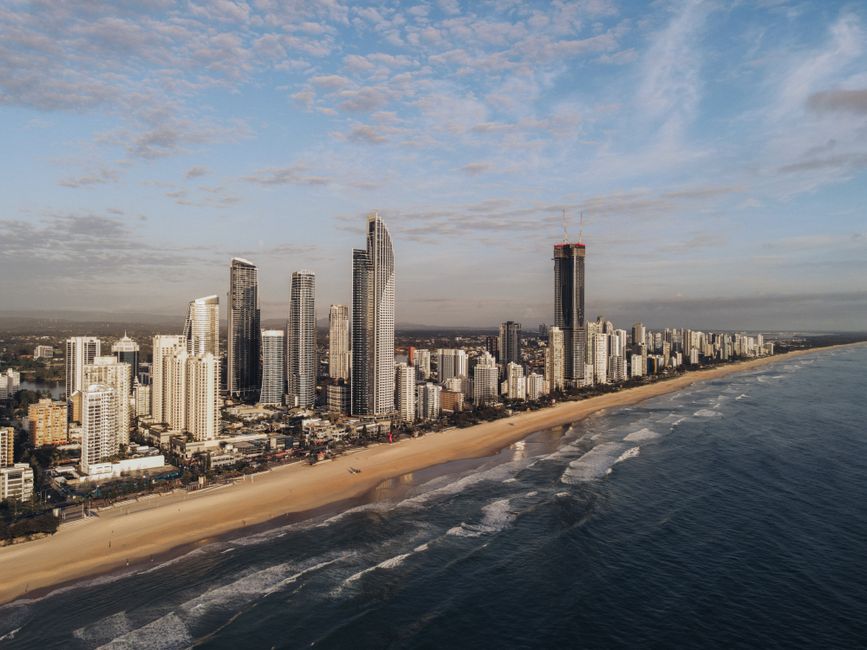
Gold Coast City Council is approaching a decision point on short-term rental regulation that will shape the city's housing market for years — and the window to act before 2032 Olympic preparation enters full swing is narrowing fast.
The pressure is real and local. Across Surfers Paradise, Broadbeach, and the northern corridor stretching toward Coomera — where Olympic venues are already under development — long-term rental vacancy rates have tightened sharply as investment properties cycle through platforms like Airbnb and Stayz. Residents in complexes along Ferny Avenue and the Esplanade have watched buildings flip from owner-occupier and long-term tenant mixes to near-total short-stay operations, often within a single financial year.
Queensland's state government introduced a short-term rental registration framework under its Planning and Environment Court reform agenda, but enforcement and local planning controls remain substantially in Council's hands. That division of responsibility is now the central tension — and the key decisions are coming whether Council is ready or not.
The Olympic Factor Is Accelerating the Timeline
Robina Stadium and the Coomera Indoor Sports Centre are both confirmed 2032 Olympic venues, and accommodation planners working on Games infrastructure have flagged the Gold Coast's short-term rental saturation as a complicating variable in guaranteed housing supply for athletes, officials, and workforce during the event. That gives the regulatory question an urgency it lacked two years ago.
Gold Coast's total dwelling approvals ran at elevated levels through 2024 and into 2025, but the pipeline is heavily skewed toward high-density product on the coastal strip — exactly the segment most vulnerable to short-term rental conversion. The Queensland Government's own housing data, published through the Department of Housing, shows the Gold Coast local government area among the state's tightest rental markets, with vacancy rates that have sat below two per cent for an extended period.
The City of Gold Coast's City Plan 2016 currently treats short-term accommodation as a use-class question handled at the development application stage, but it does not cap the proportion of units within a given building or precinct that can operate as short-stay. That gap is what advocates on both sides are watching.
Four Decisions That Will Define the Outcome
Council planners are understood to be working through at least four distinct policy levers, each carrying different political consequences ahead of the 2028 council election cycle. First is whether to adopt a registration and compliance scheme with real teeth — annual fees, inspections, and cancellation powers — rather than the current largely complaint-driven model. Second is whether to amend the City Plan to allow body corporates to set binding short-term rental caps by ordinary resolution rather than requiring unanimous agreement under the Body Corporate and Community Management Act.
Third, and most contested, is whether the Pacific Motorway corridor from Robina to Ormeau will be designated a long-term residential priority zone ahead of Olympics planning, effectively restricting new short-stay approvals in key growth precincts. Fourth is the question of retrospectivity — whether properties already operating as de facto serviced apartments in buildings not built for that purpose will face compliance orders or grandfather protections.
Property industry bodies and individual investors are watching the third and fourth questions most carefully. Owners who paid upward of $650,000 for one-bedroom units in Broadbeach towers specifically to short-let them have significant capital at stake. Community housing advocates, meanwhile, point to the Southport CBD revitalisation precinct, where Council has invested in streetscape upgrades partly premised on attracting permanent residents, as a case study in what gets undermined when short-stay operators dominate an area.
The next formal opportunity for Council to move is the scheduled City Plan amendment round later in 2026, with submissions likely to open in the September quarter. That timing means any substantive rule change would not take effect until mid-2027 at the earliest — leaving roughly five years before Olympic logistics demand a settled, functional accommodation market across the city. Whether Council treats that window as sufficient breathing room or a reason to act faster will depend heavily on the political calculus inside chambers on Evandale Place in Southport.