Towers vs. Townspeople: The Fight Over Gold Coast's Next Wave of Development Explained
From Burleigh Heads to Southport, residents are pushing back hard against new builds — but the developers and planners aren't wrong either.
From Burleigh Heads to Southport, residents are pushing back hard against new builds — but the developers and planners aren't wrong either.
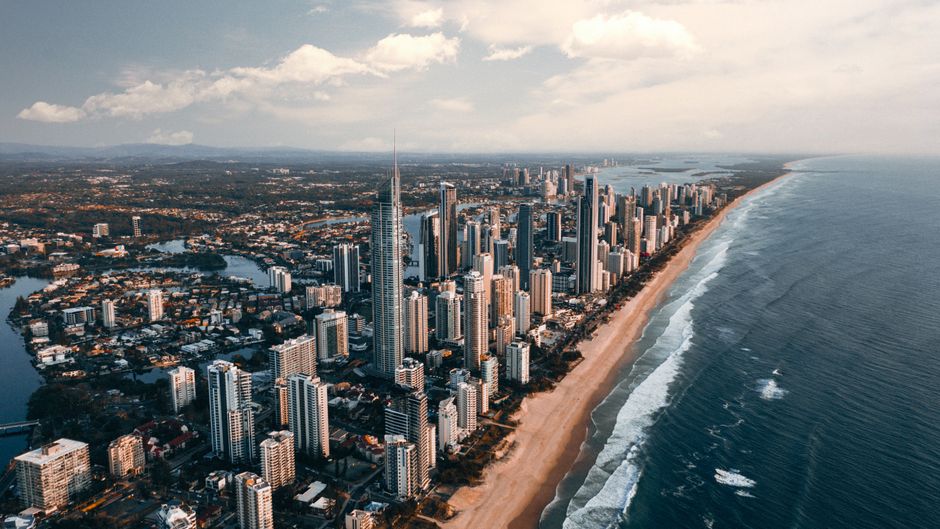
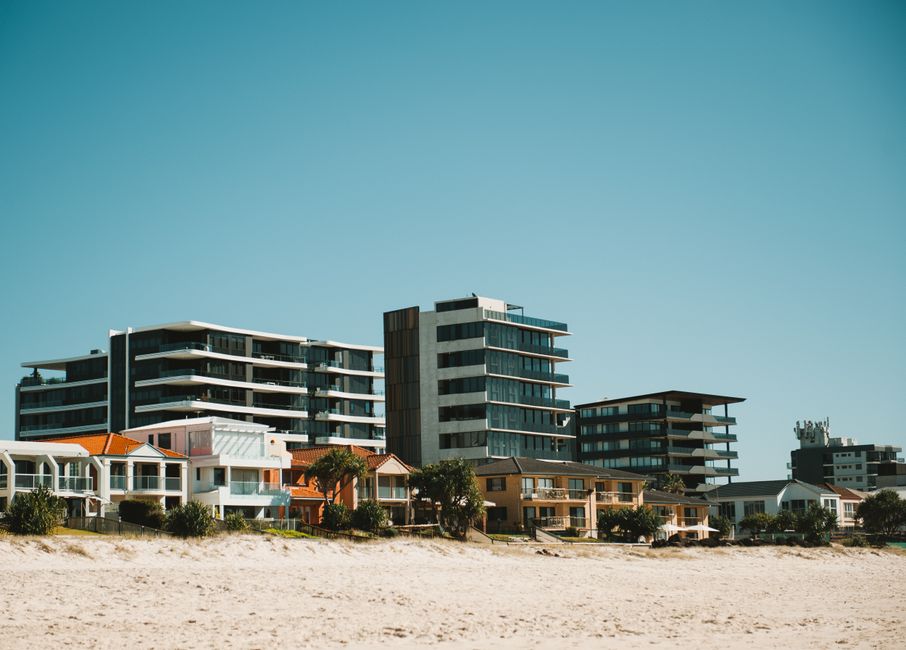
A 27-storey mixed-use tower proposed for the corner of James Street and the Gold Coast Highway in Burleigh Heads drew more than 340 formal objections to Gold Coast City Council last month — one of the highest submission counts for a single development application in the city's recent history. The project, which would replace a low-rise retail strip with 180 apartments and ground-floor commercial tenancies, has become the flashpoint for a much wider argument about who the Gold Coast is being built for.
The timing matters. Queensland's median dwelling price sits around $850,000, and the Gold Coast's lifestyle premium has pushed entry-level stock well above that in suburbs like Broadbeach and Burleigh Heads, where one-bedroom apartments routinely clear $700,000. The state government's South East Queensland Regional Plan targets the delivery of 900,000 new dwellings across the region by 2046. Council planners, bound by that framework, are under real structural pressure to approve density. Residents' groups, equally, are watching their streets change faster than the infrastructure serving them.
The community coalition that formed around the Burleigh Heads application — loosely organised under the banner Save Burleigh, which has run a letterbox campaign across the 4220 postcode since May — isn't simply anti-development. Their objections centre on three specific concerns: building height exceeding the local area plan's 15-storey preferred maximum by almost double, the absence of any affordable housing component, and traffic modelling they argue underestimates peak congestion on the Gold Coast Highway near the Burleigh Heads surf club precinct.
Similar objections have surfaced in Southport, where a proposed 34-storey residential tower on Scarborough Street is working through the Council's development assessment pipeline. The Southport Residents and Ratepayers Association lodged a formal submission in June arguing that trunk infrastructure — sewerage capacity in particular — hasn't kept pace with approval rates in the suburb's high-density core. Gold Coast Water confirmed in April that upgrade works on the Southport sewerage network aren't scheduled for completion until mid-2028.
These aren't fringe concerns. Council received 1,847 properly-made submissions across all development applications in the 12 months to March 2026, up 23 percent on the same period two years earlier. That number tracks directly with the spike in applications: 412 development applications were lodged with Gold Coast City Council in the March 2026 quarter alone, compared with 318 in the March 2024 quarter.
Developers and urban planners make a pointed counterargument. The Urban Development Institute of Australia Queensland has argued consistently that restrictions on density in well-serviced corridors — particularly along the Gold Coast light rail route between Helensvale and Broadbeach — push demand into lower-density suburbs and greenfield estates, increasing car dependence and long-term infrastructure costs. The light rail corridor, now operating on its Stage 3 extension through to Burleigh Heads, represents exactly the kind of transit spine that planning theory says should absorb growth.
The affordability angle is harder to dismiss. Every month a new apartment project stalls in community opposition or extended assessment, the city's vacancy rate — sitting at 0.9 percent as of June 2026 according to the Real Estate Institute of Queensland — stays dangerously low. Rental listings across the Gold Coast have declined 18 percent year-on-year. A 27-storey building containing 180 units is, whatever its aesthetic impact, 180 households that won't be competing for the existing stock.
Gold Coast City Council is currently reviewing its City Plan 2016 under a scheduled five-year amendment process, with a draft expected for public consultation in the fourth quarter of 2026. That review is the real battleground. Residents wanting height limits enforced and transition zones properly observed need to engage with that process directly — through submissions to Council's City Planning branch, not just objections to individual DAs. The UDIA Queensland is already preparing a formal submission. So, reportedly, is Save Burleigh.
The Burleigh Heads tower application is listed for a Council planning committee hearing on August 18. Whatever the outcome, it won't be the last fight of its kind.
Spread the word
About this article
Published by The Daily Gold Coast
Daily brief
Free, in your inbox before 7am. Weekdays.
More from Gold Coast