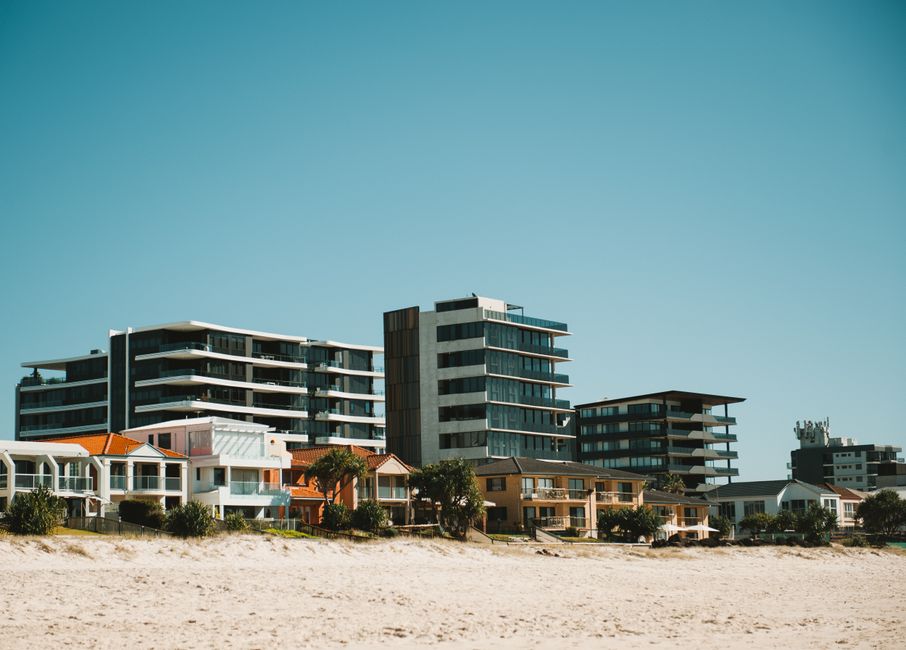
Gold Coast Auction Results and Price Data Are Sending a Clear Signal
Clearance rates are holding firm and median prices are pushing higher, suggesting the Gold Coast property market is moving in a direction that sellers will like and buyers need to act on.
The numbers don't lie. Gold Coast auction clearance rates held above 68 percent across the June quarter, and the city's median house price has edged closer to $920,000 — well above Queensland's broader median of roughly $850,000 — according to figures compiled by Ray White Queensland for the period ending June 30. That gap is widening, not shrinking, and agents working the stretch from Broadbeach to Burleigh Heads say demand shows no sign of softening heading into the second half of 2026.
The timing matters for a specific reason. Melbourne's auction market has been rattled by seller hesitancy, with vendors in that city increasingly opting for private treaty over the hammer. The Gold Coast is running the opposite playbook. More vendors here are choosing auction, not fewer, and the results are backing them up. When the market two states south is pulling back from auctions, Queensland's coastal benchmark holding firm is a meaningful contrast — and one that local buyers and investors ignoring southern headlines should take note of.
Broadbeach and Burleigh Leads the Charge
Broadbeach and Burleigh Heads remain the two postcodes doing the heavy lifting. In Broadbeach, a three-bedroom apartment on Elizabeth Avenue cleared at $1.42 million under the hammer at the end of June, with seven registered bidders and competitive bidding from the opening call. Agents at Harcourts Coastal, which handles a significant volume of stock in the 4218 postcode, report that downsizer inquiry — particularly from Sydney and Melbourne — has been the dominant buyer profile since Easter. Retirees liquidating southern assets and relocating to the strip are not a new story, but the price points they're prepared to spend have lifted noticeably in the past six months.
Burleigh Heads is producing its own headlines. Detached homes within 400 metres of the Burleigh Heads National Park boundary are regularly attracting multiple offers before auction day. A Goodwin Terrace property — a renovated Queenslander on a 506-square-metre block — passed in at $1.78 million in late June but sold within 24 hours under private treaty at an undisclosed price above reserve. That pattern, passing in and selling shortly after at or above reserve, is a market functioning under pressure rather than one stalling.
What the Data Is Actually Telling Buyers
CoreLogic data for the 12 months to May 2026 shows Gold Coast house values rose 9.2 percent annually, outpacing Brisbane's 7.4 percent growth over the same period. Units have moved more sharply in percentage terms — up 11.8 percent year-on-year in the coastal strip — driven partly by a shortage of new supply. Approved residential construction on the Gold Coast fell 14 percent in the March quarter compared with the same period in 2025, according to the City of Gold Coast's development activity monitor, meaning the supply gap is unlikely to close quickly.
Tourism recovery is adding another layer. The Gold Coast Airport recorded its highest July passenger throughput since 2019 last year, and short-term rental platforms report occupancy rates in Surfers Paradise and Main Beach running above 80 percent through the June school holidays. That keeps investor appetite for units with rental income potential elevated, which in turn puts pressure on stock levels available to owner-occupiers.
For buyers, the practical read is straightforward: pre-approval before auction registration is non longer optional, it is essential. Properties that appeared negotiable six months ago are now selling on the day, sometimes over reserve by margins that would have seemed implausible in early 2025. Anyone watching a suburb like Palm Beach or Mermaid Beach from the sidelines waiting for a correction is competing against downsizers who have already sold at peak prices in other markets and have no mortgage to worry about. The data from the June quarter suggests the window for cautious offers has already closed.