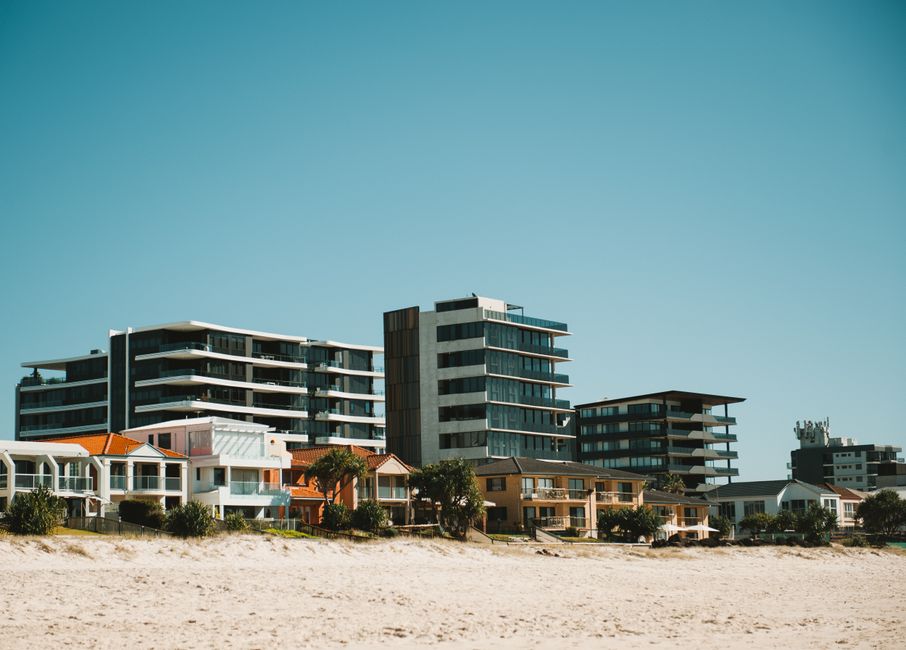
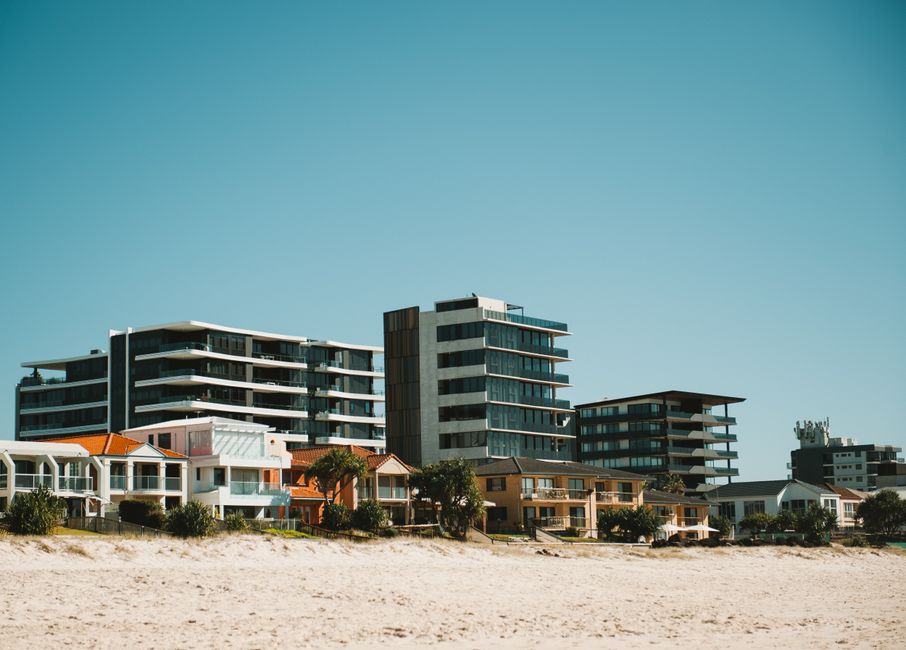
Gold Coast City Council has quietly but significantly tightened its planning scheme controls this quarter, with amendments targeting residential density and architectural design standards now affecting development applications across the Broadbeach to Burleigh Heads corridor. The changes, which took effect on 1 June 2026, introduce stricter podium height requirements, expanded deep-soil planting provisions and new visual permeability rules for ground-floor commercial tenancies — and developers are already feeling it.
The timing is deliberate. The Gold Coast's median house price has settled at roughly $850,000, and unit demand from downsizers and interstate buyers has kept development pipelines full. Council planners have been under sustained pressure to prevent the Gold Coast from repeating the mid-2010s mistakes when tower approvals along the Surfers Paradise and Southport stretch outpaced infrastructure and produced a rash of buildings that aged poorly. The new controls are an explicit response to that legacy.
What's Actually Changing on the Ground
The scheme amendments zero in on three planning precincts: Broadbeach's Surf Parade and Victoria Avenue mixed-use zone, the emerging Kirra Beach residential precinct in Coolangatta, and the Palm Beach to Burleigh Heads medium-density corridor running along Gold Coast Highway. In each area, the maximum building height for residential towers above eight storeys now requires a design excellence assessment — a formal review process that council had previously reserved only for structures taller than 25 storeys.
Podium setbacks above the fifth level must increase by at least 1.5 metres from the street boundary compared to previous requirements. Deep-soil zones — the unbuilt permeable ground that allows tree canopy and stormwater absorption — now must account for 15 percent of any site larger than 1,000 square metres, up from the previous 10 percent benchmark. For a typical Burleigh Heads development site selling north of $4 million, that extra five percent of untouched land materially cuts into the unit yield developers can extract.
Council's planning committee cited the recently completed Infrastructure Charges Study, published in March 2026, which found that medium and high-density residential developments contributed an average of $28,400 per dwelling in infrastructure charges but generated proportionally greater demand on trunk sewerage and road networks than comparable projects elsewhere in South East Queensland. That discrepancy is partly what drove the design review expansion.
Developers and Buyers Watching Closely
Urban Development Institute of Australia Queensland's Gold Coast chapter has flagged the podium and deep-soil changes as the most commercially significant elements. Their concern is supply: the Gold Coast recorded just 1,840 new unit completions in the 12 months to March 2026, according to the Queensland Government Statistician's Office, against a net migration intake that pushed the city's population past 680,000. If the new controls slow approvals or trim yield, pressure on the existing housing stock tightens further.
There are projects already caught mid-stream. A 17-storey mixed-use proposal on Surf Parade lodged in February 2026 — before the new provisions applied — is now being assessed against transitional rules that partially apply the new design review requirements. Council's planning officers have 60 business days to determine it. Applications lodged after 1 June face the full suite of changes from day one.
Buyers looking at off-the-plan purchases in the affected precincts should check when the relevant development application was lodged, not when the project is being marketed. A project approved under older controls but yet to launch sales may offer a different layout and setback profile than one going through the process now. Asking the developer or your conveyancer for the approval date and any conditions tied to design compliance is a basic but often skipped step.
Council has also flagged a public consultation period running through August 2026 on a second tranche of amendments targeting the Southport Priority Development Area — an area already governed by a separate state-level framework. How those two layers interact will determine what actually gets approved on sites along Scarborough Street and Nerang Street, where several significant residential towers are in early planning stages. Watch for the council's report to the Planning and Environment Committee, expected before the end of the third quarter.