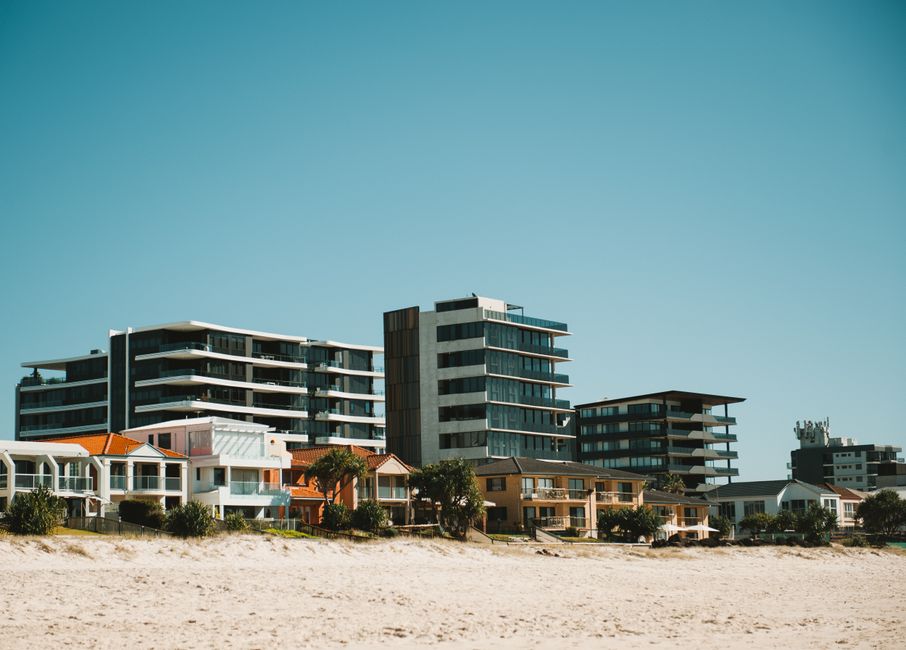
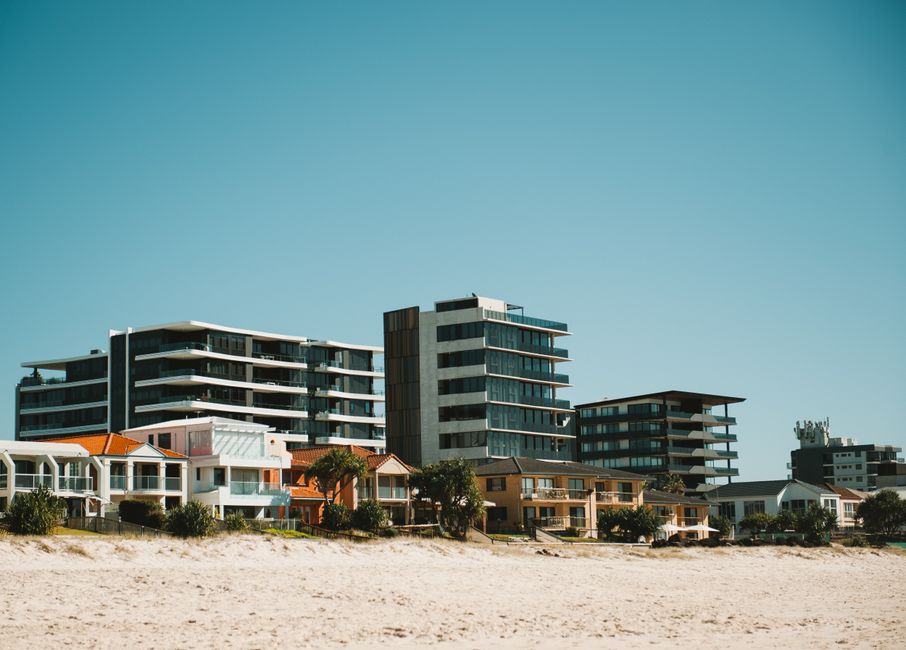
The median house price on the Gold Coast has held above $850,000 for most of 2026, and the deposit gap — the difference between what renters can save and what lenders require — keeps widening. Into that gap, build-to-rent is arriving, slowly but with genuine momentum. At least three large-scale BTR projects are either under construction or in late-stage planning between Broadbeach and Coomera, targeting a renter cohort that has largely been ignored by the traditional market: working professionals and downsizers who want security of tenure, not just a lease.
This matters right now because Queensland's rental vacancy rate sat at roughly 1.2 per cent in June 2026, according to the Real Estate Institute of Queensland, with the Gold Coast corridor running even tighter in suburbs like Burleigh Heads and Mermaid Beach. Buying is increasingly theoretical for households earning under $150,000 a year. A 20 per cent deposit on an $850,000 home requires $170,000 in cash — a figure that takes the average Gold Coast dual-income couple roughly seven to nine years to accumulate, assuming they are not simultaneously paying $700-plus weekly in rent.
What BTR Actually Delivers on the Ground
Build-to-rent is not just a rebranded apartment block. The structural difference is ownership: instead of individual investors selling individual units, a single institutional landlord — typically a superannuation fund, a listed property trust, or an offshore developer — owns the entire building and rents every unit. That means no landlord selling the property from under a tenant, no auction stress, no six-month leases rolling into uncertainty. Leases in most BTR schemes run two to five years as standard, with renewal options.
On the Gold Coast, the Niecon Group has been among the more active local players watching the BTR shift, and Broadbeach's Oracle precinct — long a bellwether for upscale apartment demand — has been cited in council briefings as a logical node for managed rental product. Further north, the Southport Priority Development Area, which stretches along Scarborough Street and into the city centre spine, includes explicit provisions for build-to-rent in its 2024 planning framework. Council approved amendments encouraging mixed-tenure projects of more than 100 units in that zone, specifically to address long-term housing supply.
Rent in BTR buildings typically runs 5 to 12 per cent above equivalent stock in the private market — a one-bedroom in a managed BTR tower in Broadbeach currently fetches around $750 to $800 per week, compared to $680 to $720 for a comparable private-market unit nearby. The premium buys stability: professional on-site management, building amenities such as gyms, co-working spaces and rooftop terraces, and critically, genuine lease security. For a renter who has been tipped out of a property three times in five years because an investor sold, that premium has real dollar value.
Buyer vs Renter: The Real Affordability Maths
The rent-versus-buy calculation on the Gold Coast in mid-2026 is genuinely complicated. A buyer purchasing at $850,000 with a 20 per cent deposit, on a 30-year principal-and-interest loan at 5.9 per cent, faces repayments of roughly $4,020 per month — about $927 per week before rates, insurance and body corporate fees. A BTR tenant paying $780 per week is behind on wealth accumulation but ahead on cash flow by $150 to $200 weekly, and faces zero maintenance liability.
The Queensland Government's Housing Investment Fund, which directs concessional finance toward social and affordable rental supply, has begun extending eligibility criteria to include BTR projects that reserve at least 10 per cent of units for below-market tenants. That shift, confirmed in the state's 2025-26 budget, is the mechanism most likely to bring genuinely affordable BTR stock to suburbs like Coomera and Pimpama, where land costs are lower and development pipelines are active.
For renters trying to navigate all this, the practical advice is blunt: get on waiting lists early. BTR projects in Queensland have leased up fast — the Newstead and Albion developments in Brisbane filled within weeks of opening in early 2026. The Gold Coast projects moving through Southport's PDA approval process are 12 to 24 months from opening doors. Renters who register interest now, maintain a clean rental ledger, and can demonstrate stable income will be first in line when those doors open.