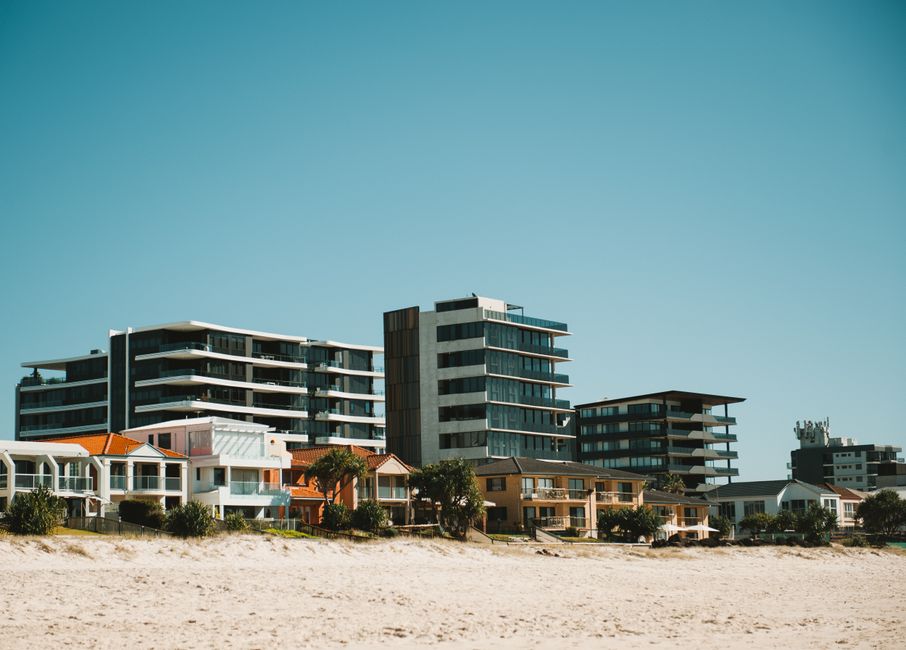
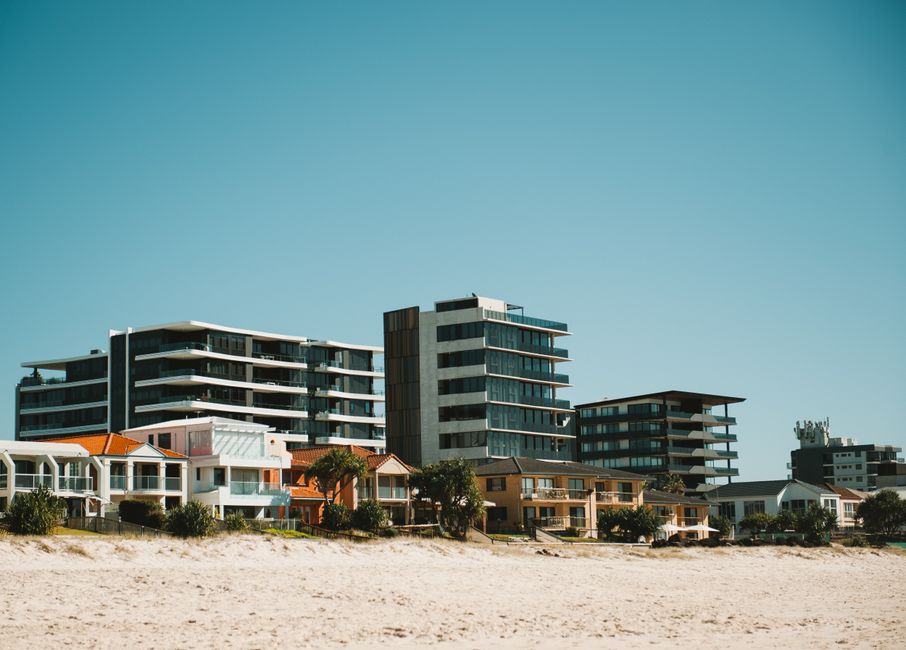
Nobby Beach is no longer just the suburb you drive through to get to Mermaid. Owner-occupier sales in the tightly held pocket between the Gold Coast Highway and the shoreline have accelerated sharply over the past 18 months, with the suburb's median house price hitting approximately $1.38 million in the June 2026 quarter — up from around $1.05 million at the same point in 2024, according to figures tracked by Herron Todd White's Gold Coast office.
The timing matters. Queensland's broader property market is holding a statewide median of roughly $850,000, meaning Nobby Beach is running well ahead of the pack. But what's shifted the conversation from investment curiosity to genuine suburb story is who's buying. Mortgage broker networks operating out of Southport and Robina are reporting a notable uptick in pre-approvals from buyers aged 28 to 38 — dual-income households, often without children, who are choosing Nobby Beach over the more established Broadbeach or the increasingly expensive Burleigh Heads strip.
What's Drawing Them In
The drawcard is layered. Nobby Beach has a walkable village core along Jefferson Lane and the surrounding streets that Burleigh had a decade ago before rents priced out the independent operators. Three specialty coffee venues have opened on or near Jefferson Lane since late 2024. The Nobby Beach Surf Life Saving Club — which had its facilities upgraded in 2023 — anchors the southern end of the beach and gives the suburb an institutional permanence that newer master-planned communities can't replicate. Gold Coast City Council's local area plan designations have also kept the strip relatively low-rise, meaning sight lines to the ocean remain intact on most blocks east of the Gold Coast Highway.
The weekend foot traffic tells its own story. On a Saturday morning, the carpark behind the IGA on Jefferson Lane fills before 8am. The Burleigh Heads Farmers Market, a 10-minute drive north, has long pulled lifestyle seekers to the southern corridor, and Nobby Beach is increasingly a beneficiary of that gravitational pull rather than just a bystander to it.
The Numbers and What Buyers Should Know
Land in Nobby Beach is genuinely scarce. The suburb covers just over 0.7 square kilometres, and turnover is historically low — fewer than 60 houses typically change hands in any given calendar year. That scarcity is arithmetic: when demand rises, prices have limited capacity to adjust through volume. Buyers who moved in 2021 and 2022, purchasing at $900,000 to $1.1 million, are sitting on substantial equity. Several of those properties have since been renovated and relisted above $1.6 million.
Units are a different conversation. The median apartment price sits closer to $820,000 — below the statewide house median but still representing a significant jump from the $590,000 range recorded in early 2023. For first-entry buyers priced out of freestanding homes, ground-floor units in the low-rise blocks along Albatross Avenue have become a practical compromise: walkable to the beach, no body corporate towers overhead, and still inside the postcode that's appreciating.
Ray White Mermaid Beach and Harcourts Coastal both listed a higher volume of Nobby Beach properties in the first half of 2026 than in the corresponding period of either prior year. Agents working the corridor are advising buyers to act before the spring selling season, when competition typically intensifies and vendor expectations firm up further.
For anyone watching from the sidelines, the practical read is straightforward. The infrastructure is already there — the surf club, the highway access to the M1, the proximity to Miami State High School. The gentrification cycle that reshaped Burleigh Heads between 2015 and 2022 didn't require a catalyst moment. It was incremental, then suddenly obvious. Nobby Beach is somewhere in the middle of that arc right now, which is precisely why the 32-year-olds are moving faster than the analysts are writing about them.