Cost of living on the Gold Coast: what you need to know in 2026
The surf city runs at a discount to Sydney and Melbourne with equivalent sun and sand.
The surf city runs at a discount to Sydney and Melbourne with equivalent sun and sand.
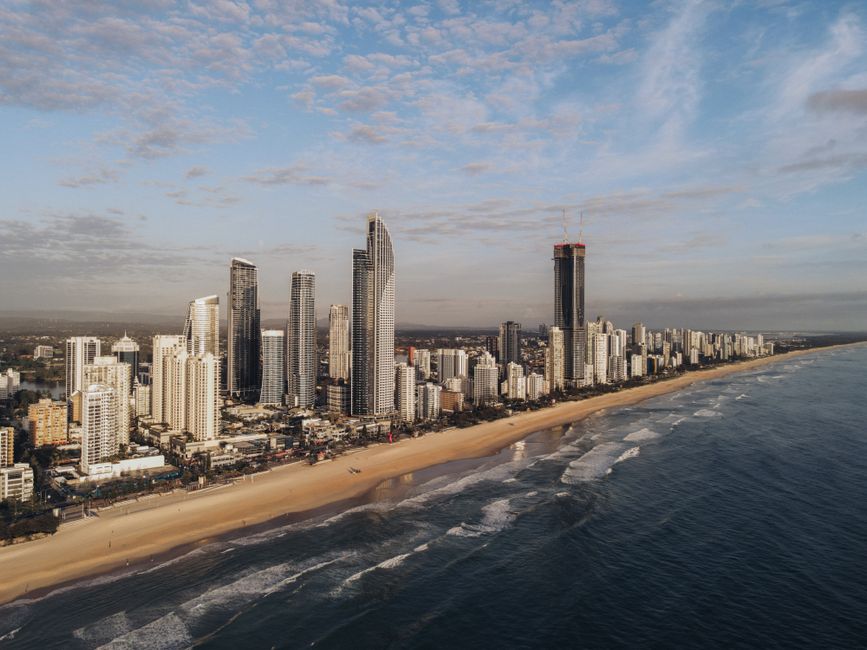
The Gold Coast's cost of living has risen as the pandemic migration surge pushed housing prices and rents to levels that surprised a market long accustomed to being the affordable beach alternative to Sydney. The premium is real but the lifestyle — beaches, weather, the hinterland — remains the value proposition that continues to attract the southern migration that has reshaped the city's population.
The Gold Coast median house price reached $1.05 million in 2026 for the first time, driven by the sustained demand from Queensland lifestyle migration and the interstate relocation wave that the city's weather and land supply have attracted. Broadbeach and Burleigh Heads houses trade above $1.5 million. The northern Gold Coast (Coomera, Pimpama) offers new housing at $600,000-$750,000 with good highway access. Apartments on the beachfront strip range from $650,000 for older units to $2 million plus for newer premium buildings.
The Gold Coast rental market has tightened substantially since 2021. A two-bedroom unit on the beachfront strip runs $650-$900 per week; inland in Robina or Carrara, comparable properties rent at $500-$650 per week.
The Gold Coast's primary lifestyle costs — beach access (free), the hinterland national parks (free or low-cost entry), and outdoor dining — are either free or significantly cheaper than the equivalent experiences in Sydney and Melbourne. Theme park family passes, which many Gold Coast residents access, run $300-$500 per year for unlimited access.
The Gold Coast's light rail network (G:link) connects Helensvale to Broadbeach and is being extended north. For CBD workers, the translink daily cap applies. Car ownership remains essential for most Gold Coast residents given the linear geography that stretches 50 kilometres north to south.
For households earning $100,000-$140,000 combined, the Gold Coast offers a beach lifestyle at a cost that Sydney cannot match and a weather dividend that Melbourne cannot offer. The trade-off is the Gold Coast's more limited professional job market, which most residents manage through remote work or Brisbane commuting arrangements.
This article was compiled by AI from the sources linked above and screened before publishing. See our editorial standards.
Spread the word
About this article
Published by The Daily Gold Coast
Daily brief
Free, in your inbox before 7am. Weekdays.
More from Gold Coast