Cost of Living on the Gold Coast in 2026: Tourist Prices or Liveable City?
The GC costs more than it used to — but the lifestyle premium is real.
The GC costs more than it used to — but the lifestyle premium is real.
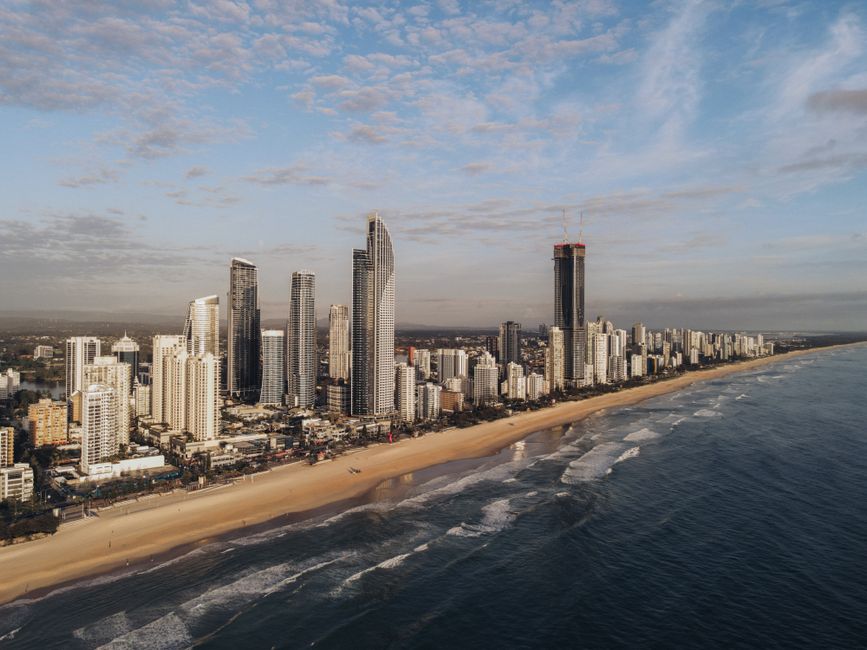
The Gold Coast's cost of living has risen sharply since 2020 as interstate migration turned what was a tourist town into a destination of choice for Queensland's population growth. Here is what daily life actually costs.
Renting a two-bedroom apartment on or near the beach in the tourist core costs $650 to $900 per week. Inland and hinterland suburbs offer better value — Robina and Mudgeeraba average $550 to $700 per week for a three-bedroom house. Buying beachside is expensive; a unit in Broadbeach or Surfers Paradise starts from $700,000 to $1.2 million.
The G:link light rail runs from Helensvale to Coolangatta. A go card covers tram, bus and connections to Brisbane. The Pacific Motorway tolls add meaningful costs for those commuting to Brisbane regularly. Most residents drive for most trips, particularly away from the tourist core.
The Gold Coast's lifestyle is largely outdoor and free — beaches, national parks, the hinterland. The theme parks, dining precinct at Broadbeach and entertainment venues add costs that are optional. Dining out ranges from affordable at suburban venues to very expensive at beachfront restaurants catering to tourism.
The Gold Coast economy has diversified into health, education, technology and construction, providing a wider wage range than the tourism base alone. Wages in the hospitality sector are at award rates, which limits purchasing power. Professional sector wages are broadly comparable to Brisbane for similar roles.
This article was compiled by AI from the sources linked above and screened before publishing. See our editorial standards.
Spread the word
About this article
Published by The Daily Gold Coast
Daily brief
Free, in your inbox before 7am. Weekdays.
More from Gold Coast