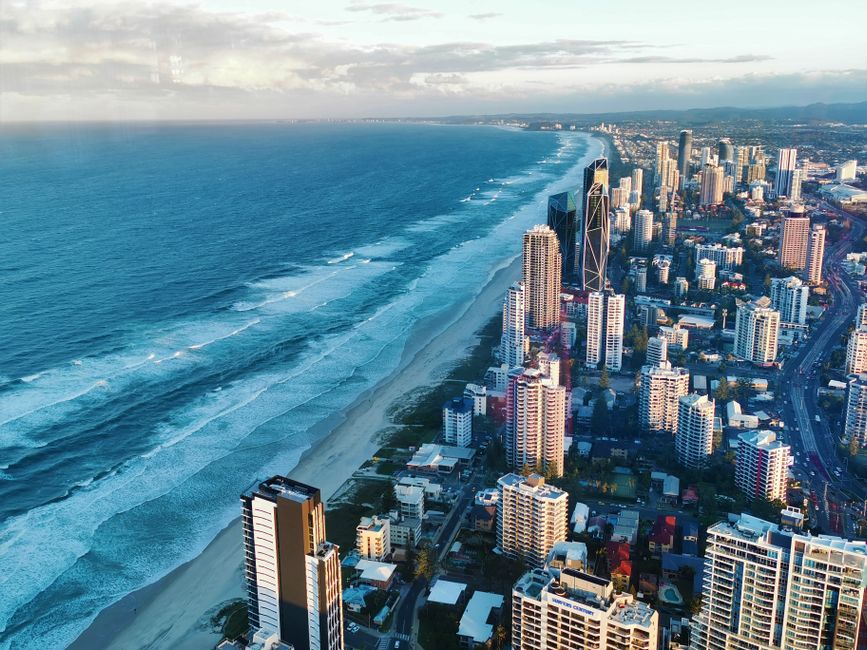
The Gold Coast's tech economy crossed a significant threshold this month. The city now hosts more than 340 registered technology startups, up from 210 in mid-2024, according to figures from the Gold Coast Innovation Hub released on July 1. That growth is no longer abstract, residents are feeling it at the supermarket checkout, on public transport, and in the GP waiting room.
The timing matters because the global conversation about what AI actually does for ordinary people has shifted sharply. After years of breathless promises, the tools are finally practical enough to sit inside everyday services. Gold Coast businesses, spurred partly by a $4.2 million Smart City grants round administered by the City of Gold Coast council last March, have been moving faster than most Australian cities to deploy them.
The Hubs Driving the Change
The two facilities doing the heaviest lifting are the Gold Coast Innovation Hub on Scarborough Street in Southport and the Precinct at the proposed Lumina Tech Campus in Coomera, which opened its first tenancy stage in February 2026. Between them, they house more than 60 active companies working on everything from computer-vision retail tools to AI-assisted aged-care scheduling platforms.
At Robina Town Centre, a local startup called Cartiq launched a shelf-monitoring system in April that uses overhead cameras and machine-learning software to alert staff when product bays run empty. The centre's management says restocking time dropped by around 28 percent in the first eight weeks of the trial. Shoppers mostly notice it as shelves that are simply more full during peak Saturday trading, the invisible kind of technology change that residents rarely attribute to AI but feel immediately.
On the transport side, Translink's Gold Coast network has been piloting a predictive timetabling tool built by a Robina-based company, Tethys Systems, since October 2025. The tool analyses real-time passenger loads on the G:link light rail corridor between Helensvale and Broadbeach South and adjusts driver dispatch windows by up to four minutes in either direction. Average wait times during the 5 p.m. to 7 p.m. peak dropped from 9.3 minutes to 6.8 minutes across the trial period, according to Translink's quarterly performance data published in June.
What Residents Are Actually Paying For
Not all of this arrives free. Several of the most visible consumer-facing products come with subscription tiers. Lifeguard AI, a Pacific Fair-based health-tech startup, offers a $19.99-per-month app that monitors sleep and hydration using phone sensors and gives users a daily wellness score calibrated against South-East Queensland climate data. It crossed 12,000 Gold Coast subscribers in June, making it one of the fastest-growing locally built health apps in Queensland.
There are friction points. Digital literacy remains uneven. A 2025 survey by Griffith University's Digital Futures Research Centre, based on its Nathan and Gold Coast campuses, found that 41 percent of Gold Coast residents over 55 had never used an AI-assisted service knowingly, and a further 22 percent were unsure whether services they used regularly contained any AI at all. The centre is running a free eight-week digital skills program at Southport Library starting August 4 specifically targeting that demographic.
The council's Smart City office says the next grants round, expected in the December quarter, will weight applications toward projects with measurable community benefit rather than pure commercial upside, a deliberate attempt to pull investment toward aged care, disability services, and public transport rather than retail optimisation alone.
Residents who want early access to local tech trials can register through the City of Gold Coast's Digital Resident Panel, which launched its sign-up portal on June 30 at goldcoast.qld.gov.au. The panel currently has around 1,400 members and is looking to grow to 5,000 before the next smart-city infrastructure rollout in Q1 2027. Getting on that list is the most direct way for an ordinary Gold Coaster to shape which technologies land in their suburb first.