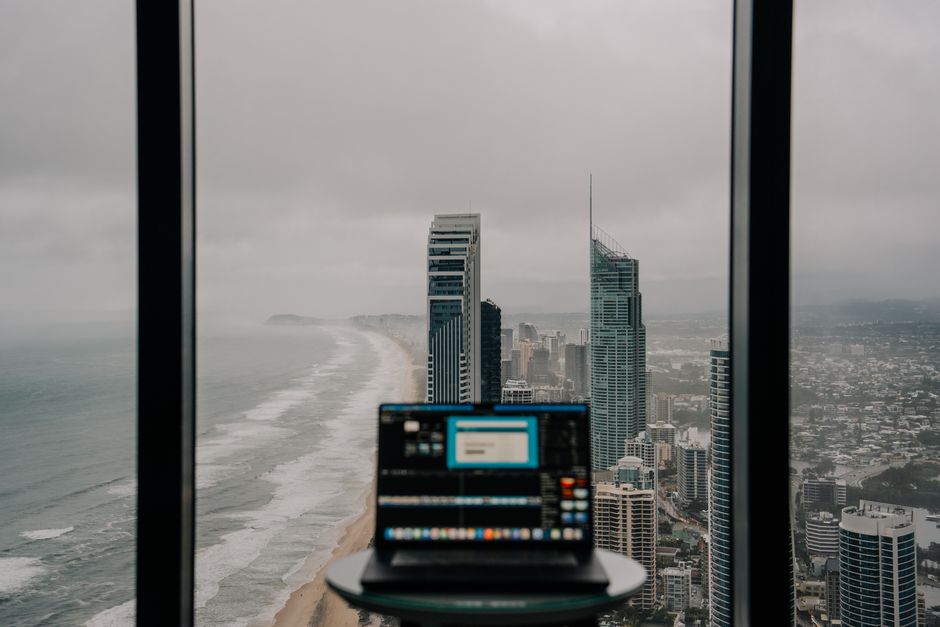
At least a dozen Gold Coast businesses have already signed early-access agreements with Australian AI platform providers ahead of product releases scheduled for late 2026 and early 2027, according to documents circulated at last month's Tech Gold Coast Summit at the Gold Coast Convention and Exhibition Centre. The message from vendors was unambiguous: the tools that businesses trialled hesitantly in 2024 are about to become unrecognisable.
The timing matters because the competitive pressure is compressing. Globally, browser ecosystems are fracturing, spyware scandals are eroding trust in enterprise software, and EV hardware is proving that building a great product means nothing if adoption lags. AI adoption risks the same fate. Gold Coast businesses that wait another 12 months to engage seriously with the roadmap may find themselves behind rivals who locked in integrations while prices were still negotiable.
What's Actually Coming — and Who's Building It Here
The most concrete local development is at Molendinar-based technology consultancy Reef Digital Agency, which is piloting an AI-assisted content and customer-service stack built on large language model APIs, with a planned full rollout to SME clients before the end of Q3 2026. The system is designed to handle inbound customer queries, generate personalised email sequences, and flag inventory anomalies — replacing tasks that previously required two to three part-time staff hours per day. Pricing for the managed service tier is expected to sit around $1,800 per month for businesses turning over between $2 million and $10 million annually.
Meanwhile, the Advance Queensland Digital Economy Strategy — the state program that has funnelled $24 million into tech capability grants since 2023 — is understood to be preparing a new AI-specific funding stream for announcement before September. Gold Coast City Council's own Smart City Office, based on Cavill Avenue in Surfers Paradise, has been in talks with two undisclosed vendors about deploying predictive traffic and crowd-flow modelling along the Broadbeach entertainment precinct ahead of the 2027 Commonwealth Games preparations.
Griffith University's Gold Coast campus at Parklands Drive, Southport, is running a 12-month industry partnership program that pairs final-year computer science students with local hospitality and retail businesses to prototype AI scheduling and demand-forecasting tools. The university committed $3.2 million to the program in February 2026, and the first cohort of 34 student teams began placements in April.
The Numbers Behind the Noise
A May 2026 survey by the Chamber of Commerce and Industry Queensland found that 61 percent of Gold Coast businesses with more than 10 employees had deployed at least one AI-assisted tool in the previous 12 months, up from 38 percent in the same survey a year earlier. More telling: 44 percent said they planned to increase AI spending by at least 20 percent before June 2027. The most common use cases were customer communication, accounting automation, and social media scheduling — relatively low-risk entry points.
The harder investments — AI-driven hiring, dynamic pricing engines, and real-time supply-chain analytics — are still sitting on roadmaps rather than balance sheets for most operators. That gap is where the next wave of products is aimed. Several vendors are now offering fixed-fee implementation packages under $10,000, specifically to get past the procurement hesitation that stalled uptake in 2024 and 2025.
For Gold Coast businesses trying to make sense of what to do before the end of the financial year, the practical calculus is straightforward. Identify one repetitive internal process consuming more than five hours of staff time per week, shortlist two or three tools that address it specifically, and request a paid proof-of-concept rather than a free demo — vendors with genuine roadmaps will accept paid pilots because it locks in the relationship. The Smart City Office is also hosting a free half-day workshop on August 12 at the HOTA precinct in Broadbeach Waters, focused specifically on the 2027 AI product pipeline. Registration opened this week.