Sun, Surf and Series A: What Makes the Gold Coast's Tech Ecosystem Unlike Anywhere Else on Earth
While Sydney and Melbourne fight over Australia's startup crown, the Gold Coast has quietly built something neither city can replicate.
While Sydney and Melbourne fight over Australia's startup crown, the Gold Coast has quietly built something neither city can replicate.

The Gold Coast attracted more than $340 million in venture capital and seed funding across its tech sector in the 12 months to June 2026, according to figures compiled by startup advocacy group Tech Gold Coast — a record for a city that serious investors once flew over on their way to Brisbane. That number still trails Sydney's billions, but the trajectory, and more critically the cost structure underneath it, is what's turning heads in San Francisco and Singapore alike.
The timing matters because the global startup funding environment has been bruising. US venture capital deal volume dropped 18 percent in the first quarter of 2026 compared to the same period last year, per PitchBook data. Founders are watching burn rates the way they once watched growth metrics. In that context, cities that offer runway extension without sacrificing talent density are suddenly very attractive. The Gold Coast offers exactly that proposition, and a growing cluster of international investors are starting to notice.
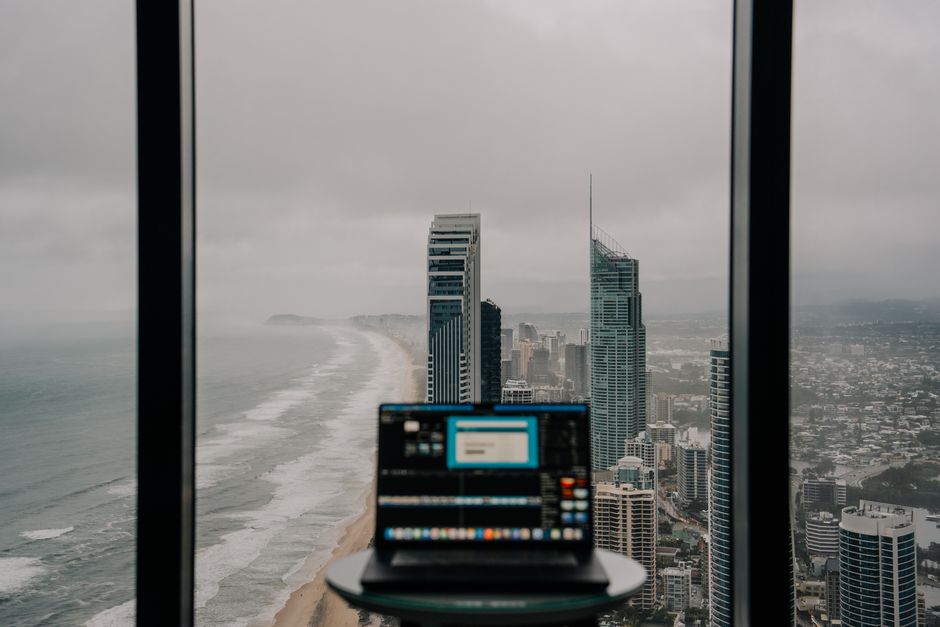
The geographic heart of this story runs roughly six kilometres down the Gold Coast Highway from Broadbeach's Peerless Avenue precinct south through Mermaid Beach and into the emerging cluster around James Street in Burleigh Heads. That strip has absorbed at least a dozen startup studio relocations and new company registrations since January 2025 alone. Office rents along that corridor still sit around $420 to $480 per square metre annually — roughly half what a comparable fitout costs in Sydney's Surry Hills or Melbourne's Cremorne.
Two organisations are doing much of the heavy lifting. Advance Queensland's Startup Precinct program has channelled grant funding directly into Gold Coast-based early-stage companies since 2023, with 34 local businesses receiving between $25,000 and $150,000 each under the most recent intake that closed in March 2026. Meanwhile, Gold Coast-based accelerator SproutX — which originally focused on agri-tech before broadening its mandate — ran its first cohort specifically targeting climate tech and hardware startups in February, attracting applicants from seven countries. Neither organisation has infinite resources, but both are punching well above their weight class.
Bond University on University Drive in Robina has also emerged as a genuine pipeline, not just a talking point. Its entrepreneurship program placed 19 student-founded ventures into external funding rounds between 2024 and mid-2026. That's a small number in absolute terms, but the conversion rate from student project to funded company is now comparable with programs at universities three times Bond's size.
Every story about the Gold Coast eventually mentions the beaches. This one is no different, because it turns out the lifestyle factor is functioning as genuine competitive infrastructure rather than background scenery. Founders and technical leads who have relocated from London, Toronto and Shenzhen consistently cite the same calculation: lower personal cost of living, access to surf at Snapper Rocks or the Spit before 8am, and a serious enough professional community that isolation is no longer the trade-off it once was.
The city's population crossed 750,000 in early 2025, and the proportion of residents employed in information and communications technology has grown faster here over the past three years than in any other Queensland local government area, according to the Australian Bureau of Statistics 2025 regional employment data. That's not a coincidence — it's the result of deliberate rezoning decisions by Gold Coast City Council that fast-tracked planning approvals for mixed-use tech precincts around Southport's Scarborough Street and along the light rail corridor.
None of this means the ecosystem is finished or invulnerable. Founders currently building here flag two consistent pressure points: access to deep-pocketed local lead investors willing to write cheques above $5 million, and a talent shortage in machine learning and embedded systems engineering that the city's universities cannot yet fill fast enough. Both problems are solvable, and both are already attracting proposed solutions — a new Queensland Government co-investment vehicle expected to launch before December 2026, and a federally funded TAFE digital skills program set to open its Gold Coast campus on Griffith Street, Coolangatta, in the first quarter of 2027. Founders who want a head start would do well to register interest with Tech Gold Coast's member portal now, before the next funding intake window opens in September.
Spread the word
About this article
Published by The Daily Gold Coast
Daily brief
Free, in your inbox before 7am. Weekdays.
More from Gold Coast