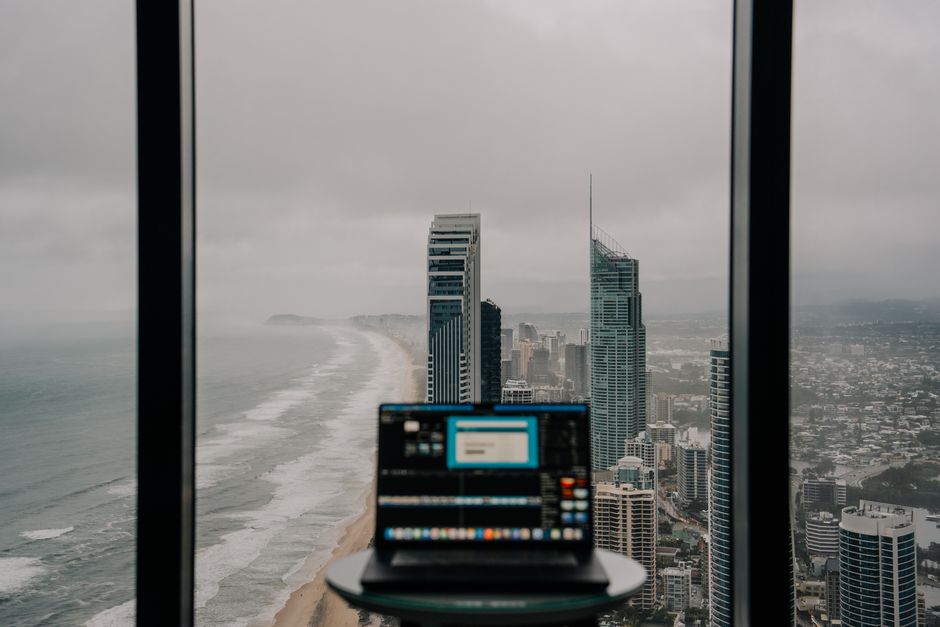
Your Phone, Your Data, Your Risk: How Cybersecurity Is Reshaping Life on the Gold Coast
From Surfers Paradise apartment blocks to Southport business hubs, Gold Coast residents are waking up to digital threats that are no longer abstract.
From Surfers Paradise apartment blocks to Southport business hubs, Gold Coast residents are waking up to digital threats that are no longer abstract.

Gold Coast households lost more than $4.2 million to cybercrime in the 2025–26 financial year, according to figures released last month by the Australian Cyber Security Centre — and local authorities say that number almost certainly undercounts the real toll, because most victims never file a report. The scams, the data breaches, the quietly installed tracking software: they are no longer problems confined to corporations or government agencies. They are Tuesday afternoon problems for people checking their bank apps on the light rail home.
The timing matters. Revelations this week that a European politician who was actively investigating surveillance software had his own handset compromised by NSO Group's Pegasus spyware have rattled privacy advocates globally. Pegasus doesn't require the target to click a link. It can infiltrate a fully updated iPhone silently. While that level of state-grade surveillance is aimed at high-value targets, security researchers warn the same underlying vulnerabilities that Pegasus exploits trickle down into cheaper, commercially available stalkerware tools — the kind that end up on phones in relationship disputes, workplace conflicts, and targeted harassment cases right here on the Gold Coast.
Gold Coast City Council launched its Digital Safety Pilot Program in March 2026, initially targeting the Southport and Nerang corridors, where small-business density is high and IT support budgets are low. The program pairs businesses with certified cybersecurity advisers for a subsidised $99 initial audit — a fee that covers a full review of network configurations, password hygiene, and device management practices. More than 340 businesses had enrolled by the end of June. The initiative runs through the Office of Economic Development at Level 2 of the Tom Tate Administration Building on Robina Town Centre Drive.
At the community level, the Gold Coast Institute of TAFE's Coomera campus has embedded a cybersecurity literacy module into its Certificate III in Business program, effective from Semester 1 this year. Students learn how to identify phishing attempts, set up two-factor authentication, and check whether their email addresses have appeared in known data breaches using tools like Have I Been Pwned. The institute says enrolments in the module jumped 38 percent between February and June — a jump instructors attribute partly to word of mouth after several local families were hit by a wave of ATO-impersonation scams in the first quarter.
Browser choice has also become a quiet flashpoint. The push by privacy-focused browsers — including Brave, Firefox, and the Tor-linked options — to position themselves as meaningful alternatives to Chrome and Safari is gaining traction among Gold Coast's tech-aware community. The change is visible at co-working spaces like Brickworks Studios on Fairway Drive, Bundall, where a growing number of freelancers have switched default browsers and installed DNS-level ad blockers as basic hygiene, not activism.
Nationally, Australians reported $3.1 billion in scam losses in calendar year 2025, per the Australian Competition and Consumer Commission's Scamwatch annual report published in February 2026. Investment scams accounted for $1.4 billion of that figure. On the Gold Coast specifically, Queensland Police Service figures show cybercrime complaints to the Southport Police Station rose 22 percent year-on-year in the first half of 2026, with romance baiting and fake parcel-delivery phishing texts leading the category counts.
Device security is another pressure point. The average Australian household now connects 17 internet-enabled devices to its home network, according to the Communications Alliance's 2026 Connected Home Report — smart TVs, thermostats, doorbell cameras, and a second or third smartphone all sharing the same router. Most of those devices ship with default passwords that are never changed.
Practical steps matter more than panic. The Australian Cyber Security Centre's free 'Protect Yourself' guide — updated in April 2026 and available at cyber.gov.au — recommends four specific actions for individuals: enable multi-factor authentication on every account that offers it, use a password manager rather than browser-saved passwords, keep automatic updates turned on, and back up critical files to an offline or separate cloud service. Gold Coast residents can also book a free 30-minute digital safety consultation at any Gold Coast City Council library branch, including Broadbeach, Robina, and Helensvale, through the council's website under the Digital Literacy Services tab.
Spread the word
About this article
Published by The Daily Gold Coast
Daily brief
Free, in your inbox before 7am. Weekdays.
More from Gold Coast