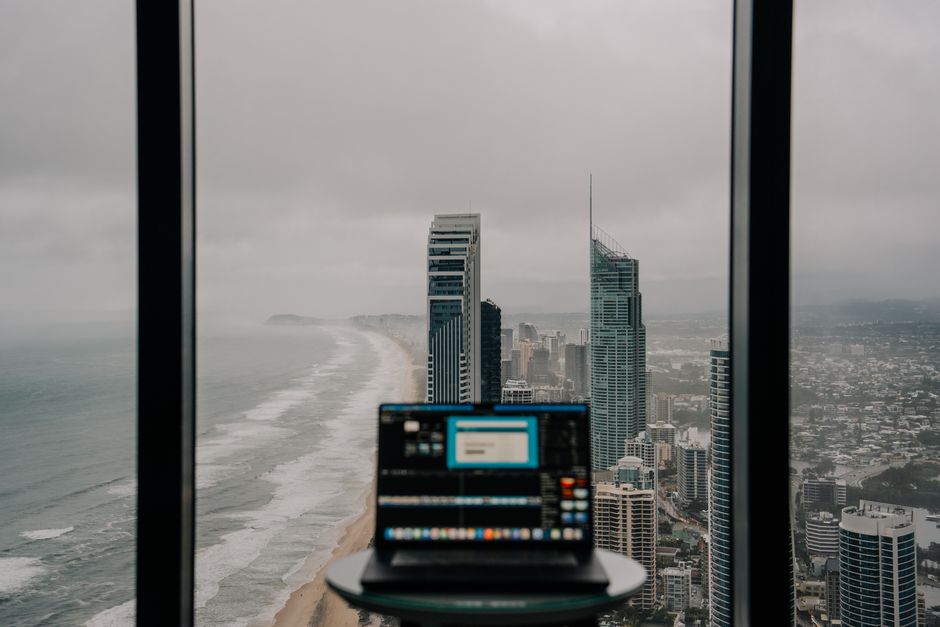
A European politician spent months probing government misuse of Pegasus spyware. His own phone was compromised with the same tool the entire time. That detail, confirmed by forensic investigators this week, landed like a gut punch across the global cybersecurity community — and it resonated loudly in Surfers Paradise, where Gold Coast-based digital security firms are wrestling with the same uncomfortable paradox: the tools built to protect people can, and do, get turned against them.
The timing matters. Australia's federal government is in the middle of enforcing its revised Privacy Act amendments, which took effect in March 2026 and require organisations with annual turnover above $3 million to report data breaches within 72 hours. For a city whose tech economy has expanded faster than almost anywhere outside Sydney and Melbourne — Gold Coast's digital sector now employs roughly 14,500 people according to the 2025 Regional Economic Snapshot from Economic Development Queensland — that obligation is no longer theoretical. It's a weekly operational pressure.
Local Firms Caught Between Clients and Conscience
At Robina Town Centre's Innovation Hub, several resident startups are building endpoint security products that use behavioural analytics to flag unusual device activity. The approach works. It also generates extraordinarily detailed profiles of individual users — what they type, when they pause, which applications they open in sequence. One Gold Coast-based firm, Pacifica Cyber, has been piloting its enterprise monitoring suite with three unnamed Queensland local government bodies since February. The product reduces incident response time. It also gives employers a window into employee behaviour that extends well beyond anything a 1990s IT department could have imagined.
Gold Coast City Council's own Digital Infrastructure Strategy, published last November, flagged privacy-preserving technology as a priority investment area through 2028. The document specifically cited the council's Smart City sensors along the Broadwater Parklands — devices that track pedestrian density and traffic flow — as a test case for anonymisation protocols. Whether anonymisation is truly irreversible is a question researchers at Griffith University's School of Information and Communication Technology have been asking publicly since at least 2024, with staff there publishing peer-reviewed work showing that so-called anonymised mobility datasets can be re-identified with roughly 73 percent accuracy when cross-referenced with commercial location data.
The Cost of Getting It Wrong — and Getting It Right
Breaches are expensive. IBM's 2025 Cost of a Data Breach Report put the average cost of a breach for Australian organisations at $4.26 million, up 11 percent on the prior year. Small and medium businesses on the Gold Coast — the backbone of the local economy along strips like Bundall Road and in the Varsity Lakes tech precinct — rarely carry insurance policies that come close to covering that figure. Cyber liability premiums have jumped sharply; brokers in Southport report that comprehensive cover for a 50-person tech company now runs between $18,000 and $35,000 annually depending on the nature of the data held.
Against that backdrop, the browser privacy wars playing out globally are not abstract. Chrome's dominance is being chipped away by privacy-centric alternatives, and the shift reflects a genuine change in user expectations. Gold Coasters are not immune. According to a May 2026 survey by Queensland consumer group Digital Rights QLD, 41 percent of respondents had changed at least one default browser or search engine setting in the past six months specifically over data concerns.
Practical steps exist for businesses and individuals right now. The Australian Cyber Security Centre's Essential Eight framework — particularly its guidance on restricting Microsoft Office macros and patching applications within 48 hours — remains the clearest baseline for local SMEs. Griffith University runs a free quarterly cybersecurity clinic out of its Gold Coast campus at Parklands Drive, Southport, open to businesses with fewer than 20 staff. The next session is scheduled for late July. Showing up costs nothing. A breach, as the numbers keep proving, costs considerably more than that.