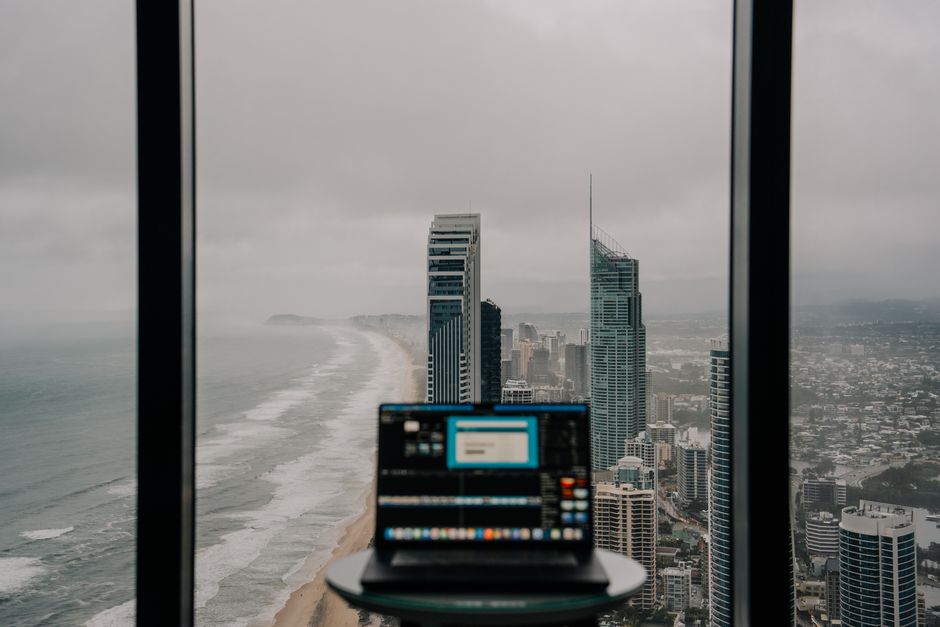
Gold Coast's cybersecurity sector generated an estimated $340 million in revenue in the 2025–26 financial year, according to figures compiled by the Digital Economy Queensland task force — a number that would have seemed implausible a decade ago for a city better known for tourism than technology. That figure reflects not just growth, but a fundamental shift in how the Gold Coast positions itself against Singapore, Tel Aviv, and Austin as a destination for privacy-focused tech talent and capital.
The timing matters. Across the world right now, surveillance scandals are multiplying. A European parliamentarian who spent years investigating spyware abuses was himself found to have had his phone compromised by Pegasus — the kind of story that lands differently when your city is actively building an industry around protecting people from exactly that class of threat. The browser wars have reignited, with privacy-first alternatives to Chrome and Safari gaining serious market share. Digital safety is no longer a niche concern. It is consumer infrastructure, and the Gold Coast has quietly spent the better part of five years building expertise in it.
A Cluster Built on More Than Surf
The Varsity Lakes precinct, anchored by the Bond University technology faculty on University Drive, has become the intellectual engine of this ecosystem. Bond's Cybersecurity Research Centre published 47 peer-reviewed papers in 2025 alone, with particular focus on mobile device forensics and zero-trust network architecture. Several of those researchers have spun out into commercial ventures, including Coral Shield Technologies, a Robina-based firm that now holds contracts with three Southeast Asian government agencies for endpoint protection services.
Down the coast, the Southport Central tower on Scarborough Street hosts a growing cluster of smaller security consultancies. Firms like Pacific Threat Intelligence and AusCyber Partners — both founded between 2021 and 2023 — have specifically chosen the Gold Coast over Brisbane or Sydney, citing lower operational costs, faster hiring from the Griffith University pipeline at the Southport campus, and a client base that spans the casino-hotel sector, health networks, and fintech startups.
That last point is underappreciated. Star Entertainment's sprawling Gold Coast property, which processes millions of transactions annually, has become an unlikely training ground for incident response teams. After a series of credential-stuffing attacks across the hospitality sector in 2023 and 2024, several local firms developed specialised playbooks for high-volume transactional environments — methodology that has since been licensed to operators in Macau and Las Vegas.
What the Numbers Actually Show
Griffith University's 2025 Graduate Employment Survey found that 68 percent of cybersecurity graduates from its Southport campus accepted roles within the Gold Coast metropolitan area, up from 41 percent in 2021. That retention rate is unusual by Australian standards, where Sydney and Melbourne historically vacuum up talent the moment a degree is conferred. Average starting salaries for security analysts on the Gold Coast now sit at $92,000, roughly $11,000 below Sydney equivalents but offset by housing costs that remain considerably lower in suburbs like Mudgeeraba and Coomera.
The Queensland state government's CyberQ program, which committed $28 million over four years beginning in July 2024, has directed a disproportionate share of funding to Gold Coast-based initiatives. The rationale, outlined in program documentation, is that the city's tourism-dependent economy creates a uniquely large attack surface — high volumes of international visitors, point-of-sale systems, short-term rental platforms — that requires bespoke solutions rather than off-the-shelf frameworks imported from the northern hemisphere.
For residents and businesses, the practical upshot is access to expertise that would normally require a flight to Sydney. The Gold Coast Cyber Hub on Bundall Road runs monthly threat-briefing sessions open to local small businesses for $45 per attendee. The next session, scheduled for July 22, covers phishing defence for hospitality operators. Pacific Threat Intelligence offers free preliminary security audits for businesses turning over less than $5 million annually — an entry point designed to grow the local client base while building brand recognition. The city's digital safety reputation, built carefully over half a decade, is now its most durable export.