property
Rent Where You Live, Buy Where You Can: The Rent-Vesting Strategy Explained for the Gold Coast Market
With Gold Coast purchase prices sitting well above the Queensland median and rents holding firm, a growing number of locals are choosing to lease on the coast while buying investment properties elsewhere, and the maths is starting to make sense.
How we reported this
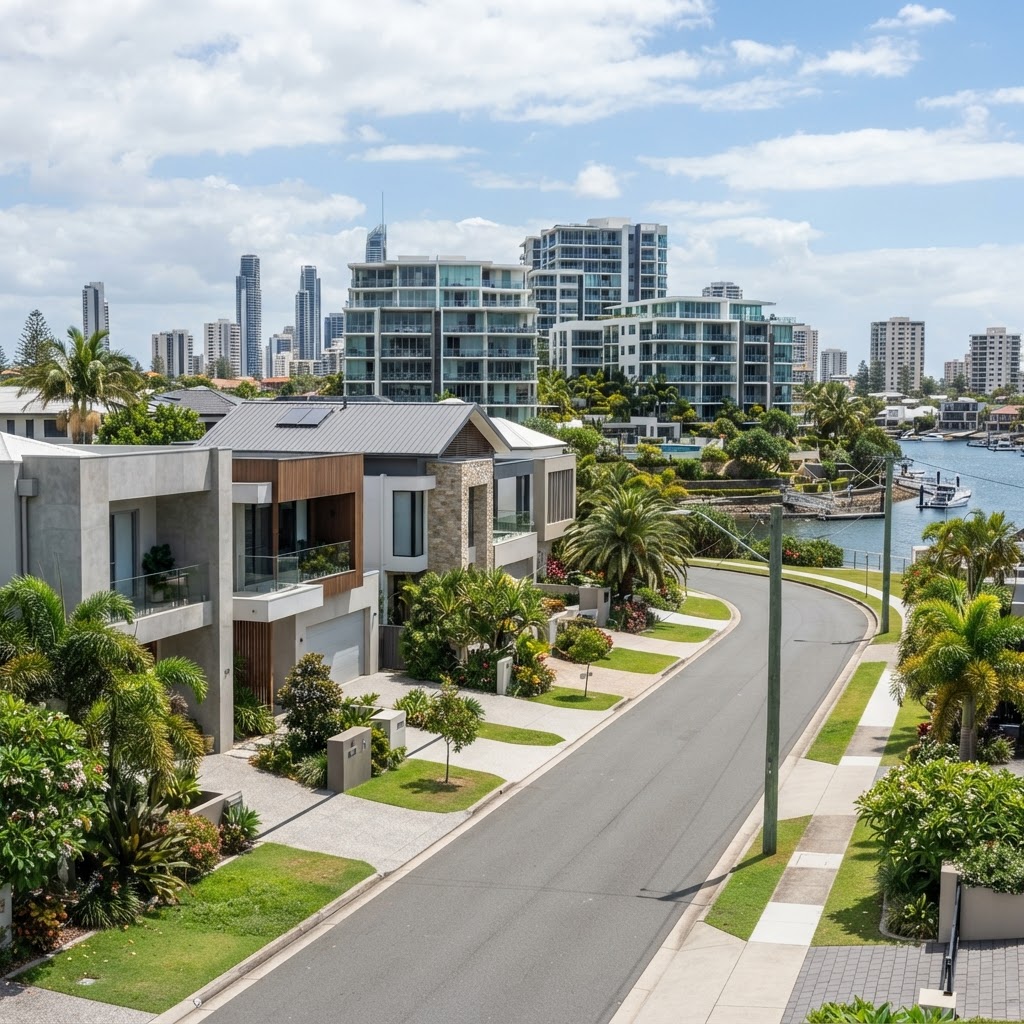
The numbers are blunt. A median-priced house on the Gold Coast now sits around $850,000, and in suburbs like Broadbeach Waters or Burleigh Heads, buyers routinely clear the $1.2 million mark. Yet the weekly rent on a comparable three-bedroom home in those same postcodes often falls between $950 and $1,100. For anyone doing the arithmetic on a mortgage versus a lease, the gap has quietly made rent-vesting, renting the home you live in while owning an investment property somewhere cheaper, one of the more discussed strategies among younger Gold Coast residents.
The timing matters because Queensland's property cycle is at a peculiar inflection point. The state government's ongoing infrastructure spending tied to the 2032 Brisbane Olympic Games has kept construction costs elevated across southeast Queensland, which is flowing through to replacement valuations and, in turn, to asking prices. Meanwhile, the Reserve Bank of Australia's rate-cutting cycle, which began in early 2025, has improved borrowing capacity on paper, but not enough to make entry-level purchases in coastal hotspots painless for a median income household. Rent-vesting has moved from a fringe workaround to a genuine first-rung strategy.
How the Strategy Works on the Ground
The mechanics are straightforward. A renter living in a two-bedroom unit near Cavill Avenue in Surfers Paradise might pay $720 a week in rent, keeping their lifestyle intact close to the beach, the light rail's G:link network, and the Pacific Fair shopping centre at Broadbeach. Instead of stretching to buy locally, they purchase an investment property in a regional Queensland market, Toowoomba, Bundaberg, and Rockhampton have all drawn attention, where the entry price might sit between $420,000 and $550,000. The tenant pays down part of the mortgage, the owner claims depreciation and interest deductions through the Australian Taxation Office's negative gearing provisions, and the investor builds equity without sacrificing a coastal address.
The key lever is the holding cost differential. On a $480,000 loan at roughly 5.9 percent over 30 years, principal and interest repayments run close to $2,850 a month. If a tenant covers $2,200 of that through rent and the investor claims tax deductions on the shortfall, the real weekly out-of-pocket cost can land below what a comparable Gold Coast mortgage would demand, sometimes significantly below. Real estate advisory firms operating out of the Robina Town Centre precinct and along the Southport CBD strip have reported increased inquiry around exactly these calculations since late 2025.
The Risks Locals Need to Price In
Rent-vesting is not a free lunch. Investors who own but do not occupy miss out on the principal place of residence capital gains tax exemption under current ATO rules, meaning a future sale triggers a tax event on any growth. Stamp duty still falls due at purchase. And the lifestyle security of renting on the Gold Coast is genuinely fragile, landlords can exit the rental market or redevelop, and vacancy rates across the city's coastal suburbs have sat below two percent for extended stretches, making relocating at short notice expensive and stressful.
Property managers along the Broadbeach-to-Burleigh corridor also note that rental increases have not stalled. A unit in Miami or Mermaid Beach that leased for $620 a week in mid-2023 is commonly re-let at $730 to $780 today, eating into the cash-flow advantage that makes rent-vesting attractive in the first place.
For Gold Coasters weighing the strategy, the immediate practical step is stress-testing both sides of the ledger with a licensed mortgage broker rather than relying on online calculators, and cross-checking investment location choices against vacancy rates published by the Real Estate Institute of Queensland. The strategy works best when the investment property is genuinely tenantable and in a market with its own demand drivers, not just a cheaper postcode chosen in a hurry. Getting that selection wrong turns a deliberate financial plan into an expensive lesson in regional vacancy cycles.
This article is general information only and is not personal financial or investment advice. Consider your own circumstances and seek licensed professional advice before making financial decisions.