property
Rent-vesting on the Gold Coast: How buyers are playing the long game without giving up their beachside lifestyle
With Gold Coast property prices holding above Queensland's median, a growing number of local renters are quietly building wealth elsewhere while keeping their Broadbeach address.
How we reported this
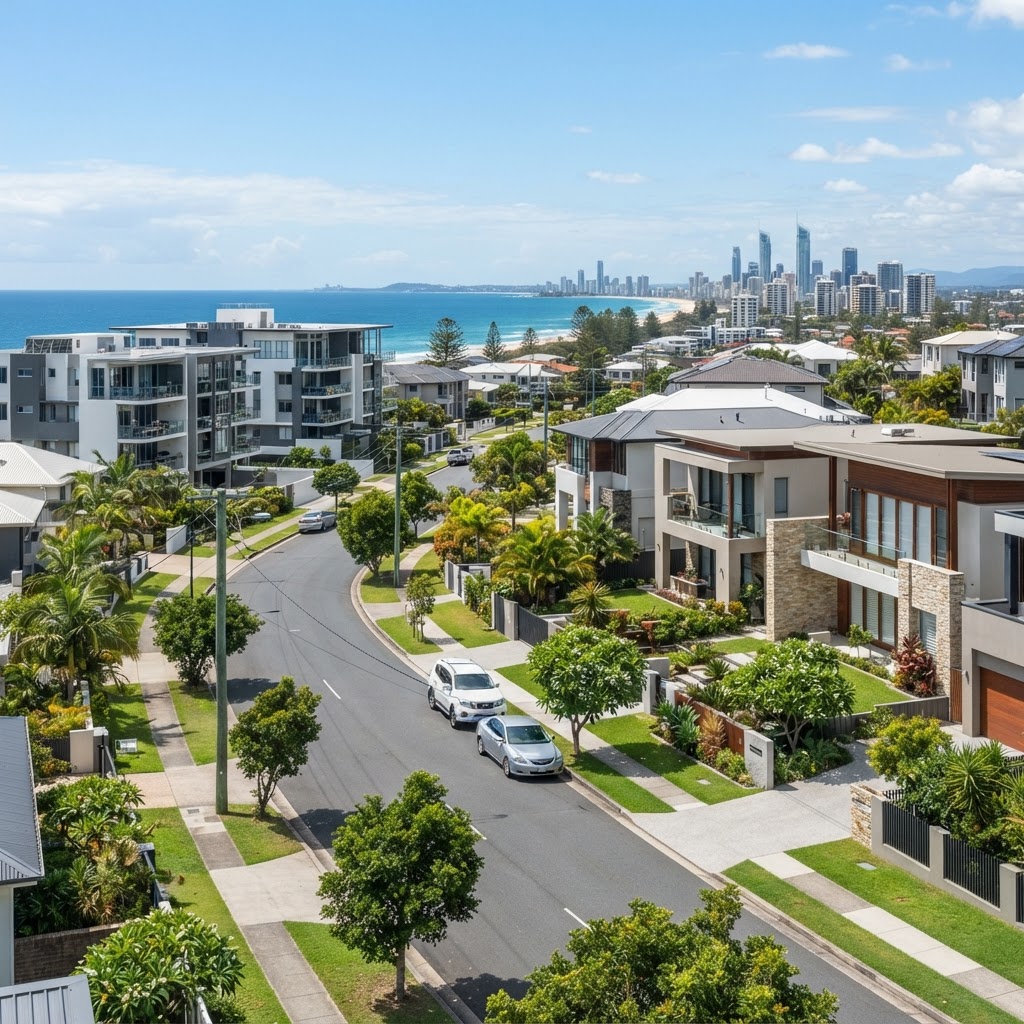
The numbers are blunt. Queensland's median house price sits around $850,000, and on the Gold Coast, where a two-bedroom unit in Broadbeach routinely trades above $900,000, the gap between what renters can afford to buy locally and what they actually want to live has turned a niche strategy into a mainstream conversation. Rent-vesting, the practice of renting in your preferred suburb while buying an investment property somewhere more affordable, is no longer just a clever workaround. For a lot of Gold Coast residents, it has become the only financially coherent path forward.
The timing matters. Interest rates have eased from their 2023 peaks but mortgage serviceability buffers remain tight under Australian Prudential Regulation Authority rules, meaning many borrowers still qualify for far less than they need to buy on the Coast. Meanwhile, the rental market here has tightened considerably, with vacancy rates in hotspots like Burleigh Heads and Palm Beach sitting well below the national average for much of 2025 and into 2026. Rents are high, but so is the lifestyle calculus, proximity to Burleigh Heads Surf Club, the dining strip along James Street in Burleigh, and access to the light rail corridor running from Helensvale to Broadbeach are factors renters price in differently than a bank does.
How the strategy actually works here
The basic mechanics are straightforward. A renter paying $750 a week for an apartment in Mermaid Beach, a realistic figure in the current market, redirects their savings toward a deposit on a property in a regional Queensland city like Toowoomba or Townsville, where entry-level houses still trade between $400,000 and $550,000. The investment property generates rental income, the owner claims tax deductions on expenses including loan interest, and the equity builds over time. Eventually, in theory, that equity funds a future purchase back on the Gold Coast, or the investor simply holds a diversified portfolio and rents indefinitely.
The strategy gets traction here partly because of the Gold Coast's own demographic mix. Downsizers moving south from Brisbane and Sydney have pushed prices in precincts like Robina and Hope Island beyond what first-home buyers earning typical wages can bridge, even with Queensland's First Home Owner Grant of $30,000 available for new builds. That grant, unchanged since it was lifted to its current level, does little for buyers chasing established stock in Broadbeach Waters or Currumbin, where land values alone often exceed $600,000. For those buyers, rent-vesting lets them stay in the market without leaving the suburb.
The risks are real, and local advisers are saying so
Rent-vesting is not without friction. Renters on the Gold Coast are exposed to landlord decisions, lease non-renewals, rent increases, and the emotional instability of not owning the home you live in. The City of Gold Coast does not have a rent control mechanism, and state tenancy law changes that took effect in mid-2024 improved protections modestly but did not fundamentally alter the power balance between landlord and tenant in a tight market.
There is also the question of cross-subsidisation. Carrying a mortgage on a Toowoomba investment property while paying market rent in Surfers Paradise means two large housing costs running simultaneously. If the investment sits vacant for even six weeks, the cash-flow pressure can be severe. Financial planners operating under the Australian Securities and Investments Commission licensing framework are required to model these scenarios in a Statement of Advice before recommending the strategy, something prospective rent-vestors should insist on before signing anything.
For Gold Coast residents who want to run the numbers themselves, the Real Estate Institute of Queensland publishes quarterly median price data broken down by suburb. Cross-referencing those figures against rental yields, currently averaging around 4 to 5 percent gross in many regional Queensland postcodes, gives a starting point. The practical advice from anyone who has done this: choose the investment market on data, not convenience, and build at least three months of mortgage repayments in a cash buffer before settlement day. The lifestyle premium of living near the Kurrawa surf break is real. So is the cost of funding it on someone else's lease.
This article is general information only and is not personal financial or investment advice. Consider your own circumstances and seek licensed professional advice before making financial decisions.