Worongary Is Quietly Outperforming Every Suburb Around It
While buyers chase Broadbeach and Burleigh, a mid-hinterland suburb with a median well below the Gold Coast average is posting some of the region's strongest annual growth.
While buyers chase Broadbeach and Burleigh, a mid-hinterland suburb with a median well below the Gold Coast average is posting some of the region's strongest annual growth.
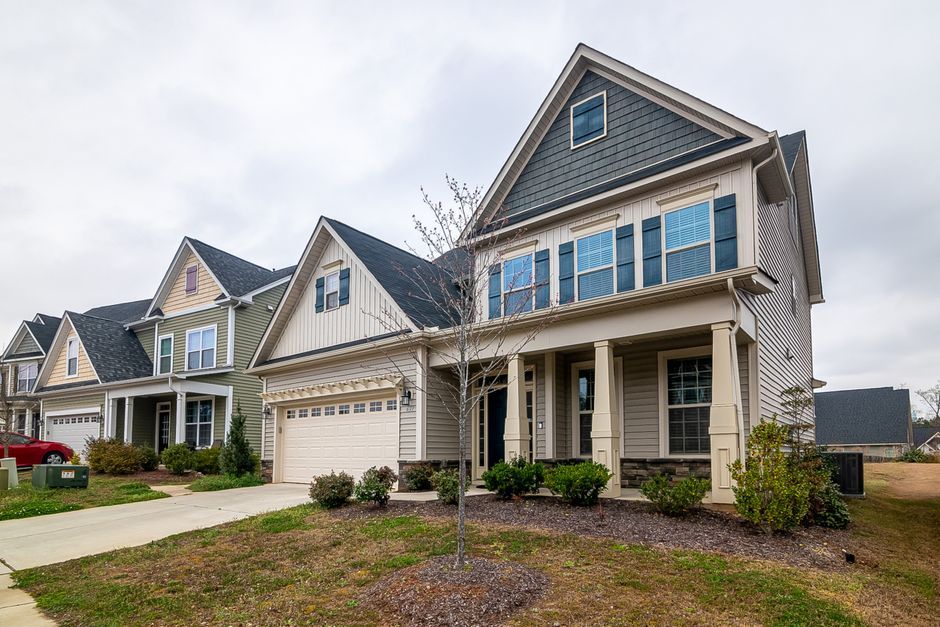
Worongary's median house price hit $895,000 in the June 2026 quarter — up roughly 14 percent year-on-year — while the broader Gold Coast median sits at approximately $850,000 and several of its immediate neighbours, including Mudgeeraba and Reedy Creek, have plateaued below 8 percent growth over the same period. The numbers are turning heads among buyers agents and local selling agents who have spent the past two years watching coastal postcodes absorb all the attention and most of the capital.
The timing matters. Queensland's stamp duty burden has climbed sharply across prestige suburbs — a buyer entering the Broadbeach market at $1.4 million faces a transfer duty bill north of $70,000 under current thresholds — pushing price-conscious owner-occupiers and investors to look inland. Worongary, sitting roughly 12 kilometres from the coast along the Pacific Motorway corridor, offers a rare combination: land size averaging 600 to 700 square metres, proximity to the M1 on-ramp at Mudgeeraba Road, and a price point that still keeps total acquisition costs manageable.
Three forces are converging on Worongary right now. First, the Coomera to Cavill light rail extension — Stage 3 of the Gold Coast Light Rail project — has renewed interest in every suburb with reasonable road access to a future stop, and Worongary sits within a plausible commute catchment of the Helensvale heavy rail interchange. Second, the suburb borders the Robina Town Centre precinct, where the Robina Hospital campus expanded its specialist services in late 2025, creating a steady employment base for health workers who want a house with a backyard rather than a Varsity Lakes apartment. Third, the private school corridor along Scottsdale Drive — which runs within two kilometres of several established Christian and independent colleges including Hillcrest Christian College on Middle Road — continues to pull families who have been priced out of the Mudgeeraba school-zone market entirely.
Downsizers are also a factor, though perhaps not in the way the broader Queensland market might suggest. Rather than flooding the suburb with stock as they list family homes, many Worongary downsizers are choosing to stay put, renovating instead of selling, which is compressing available listings. At the end of June 2026, fewer than 18 houses were listed for sale across the suburb — an historically tight number for a community of roughly 4,500 residents. Days on market averaged 22, compared to 41 for the Gold Coast overall.
Not every street performs equally. Properties on the eastern side of Worongary, closer to the Nerang–Broadbeach Road boundary, have attracted stronger interest than those tucked into the elevated western pockets near Tallai Road, where access to services requires a car for every errand. The $850,000 to $950,000 band is where most competition sits; anything listed below $800,000 with decent land is attracting multiple offers within the first open home weekend.
Investors should note that Worongary's rental vacancy rate sits at approximately 0.9 percent as of May 2026, according to figures compiled by the Real Estate Institute of Queensland. Gross rental yields for a typical four-bedroom house are running between 3.8 and 4.2 percent — modest by pure yield standards, but meaningful when stacked against capital growth that has outpaced both Mudgeeraba and Upper Coomera over the past 18 months. Depreciation schedules on the suburb's large cohort of 1990s and early 2000s brick homes can still add genuine after-tax value for investors seeking a buy-and-hold position.
The practical advice is straightforward: get finance pre-approved and move before spring. The September and October listing seasons on the Gold Coast historically bring more stock but also more competing buyers. Worongary's window of relative affordability — it remains roughly 15 percent cheaper per square metre than Robina — will narrow as the light rail planning corridor hardens into confirmed station locations. Once that happens, the suburb's current status as an under-the-radar outperformer becomes a headline, and headline suburbs command headline prices.
Spread the word
About this article
Published by The Daily Gold Coast
Daily brief
Free, in your inbox before 7am. Weekdays.
More from Gold Coast


