Houses vs Units: The Gold Coast's Growing Price Split and What Buyers Need to Know
As detached homes surge ahead of apartment values, the divergence is reshaping which neighbourhoods offer genuine opportunity.
As detached homes surge ahead of apartment values, the divergence is reshaping which neighbourhoods offer genuine opportunity.
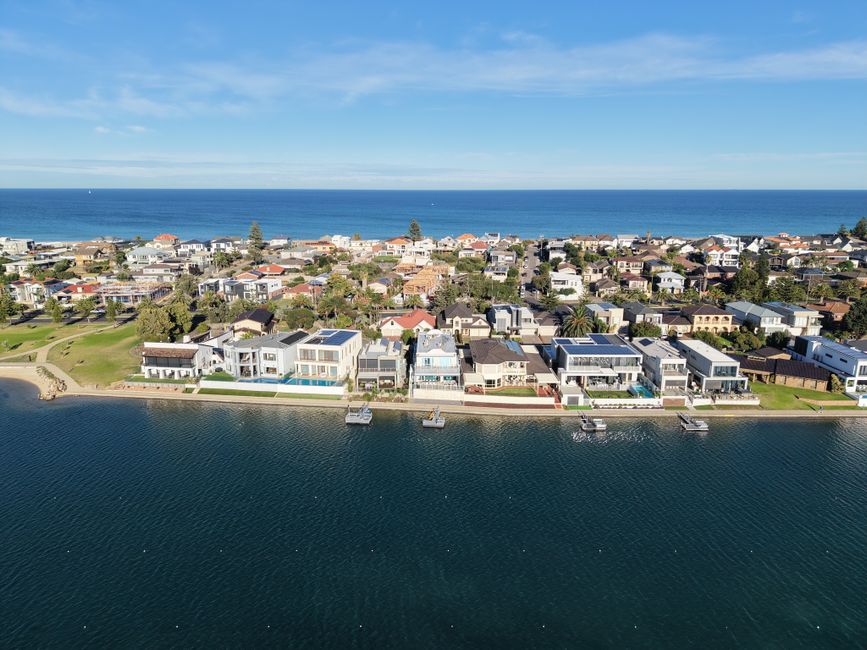
The Gold Coast property market is telling two very different stories right now, and the gap between house and unit prices is widening in ways that matter deeply for buyers, investors and planners.
While Queensland's median sits around $850,000, the split between detached homes and apartments on the Coast has become pronounced. Houses in established pockets like Broadbeach hinterland and Burleigh Heads are commanding premiums that reflect lifestyle demand and land scarcity, while apartment values—particularly in secondary beachside locations—are experiencing softer momentum despite tourism recovery.
The divergence speaks to shifting buyer priorities. Downsizers, a demographic that's driven significant Coast demand in recent years, are increasingly selective. They want the lifestyle but are balking at oversupplied unit markets. Meanwhile, families seeking space and land are willing to pay a premium for detached homes within reasonable proximity to beaches and schools, even if it means moving further west toward Ashmore or Merrimac.
Data trends suggest houses have appreciated roughly 8-12 per cent annually over the past 18 months, while comparable units have tracked at 4-6 per cent. In Broadbeach specifically, a well-positioned house might fetch $2.2-2.6 million, whereas a comparable two-bedroom apartment in the same postcode sits closer to $1.1-1.4 million—a gap that's compressed buyer competition at the upper end of the unit market.
This creates opportunity for savvy investors. Secondary suburbs with good rental yields—think Southport peripheries or Labrador—offer unit stock at more reasonable entry points, particularly as working-from-home flexibility makes beachfront proximity less mandatory. Meanwhile, first-home buyers priced out of detached homes in desirable corridors are increasingly exploring townhouse subdivisions as a middle ground.
The divergence also reflects construction reality. High-rise apartment development has slowed thanks to tighter lending and affordability concerns, yet demand for standalone homes remains resilient. This supply-demand mismatch will likely persist through 2026 and beyond.
For the Coast's planning horizon, this split matters. If apartment values continue underperforming, developers may reconsider mixed-use projects, potentially opening space for other urban renewal. If the gap widens further, entire neighbourhoods could face valuation pressure.
The takeaway? Don't assume all Gold Coast property moves in lockstep. Houses and units are now operating in fundamentally different markets, and positioning accordingly—whether investing for yield or buying lifestyle—is increasingly critical to outcome.
This article was compiled by AI from the sources linked above and screened before publishing. See our editorial standards.
Spread the word
About this article
Published by The Daily Gold Coast
Daily brief
Free, in your inbox before 7am. Weekdays.
More from Gold Coast