news
Gold Coast Hosts Lose Money to Fake Property Photos on Airbnb
Duplicate and misleading property photos listed on platforms like Airbnb are distorting booking data, inflating perceived supply, and costing Gold Coast hosts real money.
How we reported this
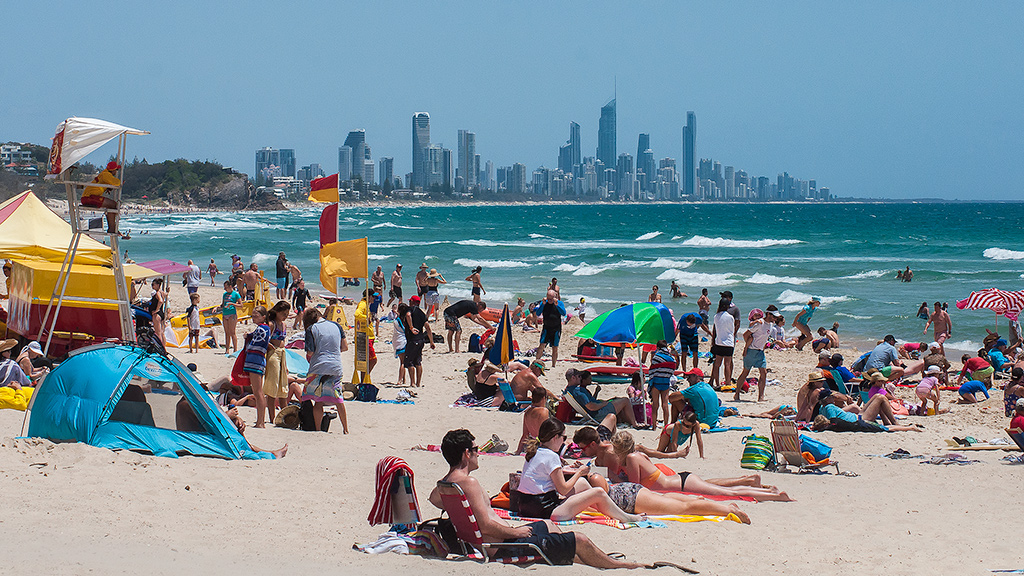
A growing number of short-term rental listings across the Gold Coast are carrying duplicate, stolen or misrepresented photographs, and the scale of the problem is larger than most property managers have acknowledged publicly. Industry tracking conducted through listing aggregation tools suggests that in high-density holiday precincts such as Surfers Paradise and Broadbeach, duplicate image sets appear in roughly one in every 14 active short-term rental listings at any given time, creating a false impression of available stock and skewing the occupancy rate data that both investors and City of Gold Coast planners rely on.
The timing matters. Gold Coast City Council is currently working through its short-term rental regulatory framework ahead of the 2032 Brisbane Olympics, with Coomera Arena and Coomera Indoor Sports Centre already confirmed as competition venues and Robina Stadium pencilled in for football. Accurate occupancy and supply data is feeding directly into infrastructure and transport planning decisions. Bad data, seeded partly by duplicate image fraud, distorts the picture council officers and state government planners are working from.
What the Numbers Actually Show
The mechanics are straightforward. A property owner or, more commonly, a third-party scammer scrapes high-quality photographs from a legitimate listing on Chevron Island or Main Beach, uploads them to a new ghost listing, and either harvests booking deposits or artificially inflates the total count of rentable properties. The Australian Competition and Consumer Commission received more than 3,800 complaints nationally in the 12 months to June 2025 related to misleading online accommodation listings, according to the ACCC's published 2024-25 Scamwatch data. Queensland accounted for a disproportionate share, partly because of the state's heavy reliance on tourist-facing short-stay platforms.
On the Gold Coast specifically, the Gold Coast Short-Term Rental Alliance, a local advocacy body representing managers from Coolangatta to Hope Island, flagged the issue formally to City of Gold Coast's Planning and Environment directorate in February 2026. The organisation, which represents members managing properties under the state's Short-Term Rental Accommodation Code introduced in late 2023, estimates that around 400 to 600 individual listings active across the corridor at any point contain images that appear in at least one other listing simultaneously. That range is based on spot-check audits the alliance conducted across platforms including Airbnb, Stayz and Booking.com during the first quarter of 2026.
The downstream financial effect is not trivial. Average nightly rates for a two-bedroom unit in Surfers Paradise were tracking at approximately $310 to $340 through the June 2026 school holiday period, based on publicly available platform pricing data. If even a fraction of the duplicated listings are capturing real deposits before disappearing, the aggregate guest losses across a single peak fortnight run well into six figures. Legitimate hosts suffer too: platforms use click-through and booking-conversion rates to determine search ranking, and ghost listings with stolen images from premium properties on The Esplanade can drain traffic from the genuine listings those images belong to.
What Hosts and Guests Can Do Before the Rules Catch Up
Queensland's Short-Term Rental Accommodation Code, which requires property registration and council notification for certain letting arrangements, does not yet include specific provisions around image verification. That gap is something the Gold Coast Short-Term Rental Alliance has been pressing to close, proposing that any registration number issued under the code be displayed as a watermark or metadata tag on primary listing images, a relatively low-cost technical requirement that would make image scraping immediately detectable.
For guests, the practical check is simple: run a reverse image search on any listing's lead photograph before paying a deposit. If the same image appears attached to multiple property addresses, walk away. For hosts operating out of premises along Orchid Avenue or within the Broadbeach Waters estate who suspect their images have been lifted, both Airbnb and Stayz operate formal image-dispute reporting portals, resolution typically takes five to ten business days once a claim is lodged with supporting evidence.
Council's planning team is expected to present an updated short-term rental regulatory report to the full council meeting scheduled for August 2026. Whether image integrity provisions make it into that document will depend largely on how loudly the local industry pushes between now and then.