news
Gold Coast's Short-Term Rental Crackdown: How It Stacks Up Against Barcelona, Amsterdam and Byron Bay
As duplicate and fraudulent property listings flood platforms like Airbnb and Stayz, the Gold Coast is scrambling to build a regulatory framework that cities from Spain to New South Wales have been wrestling with for years.
How we reported this
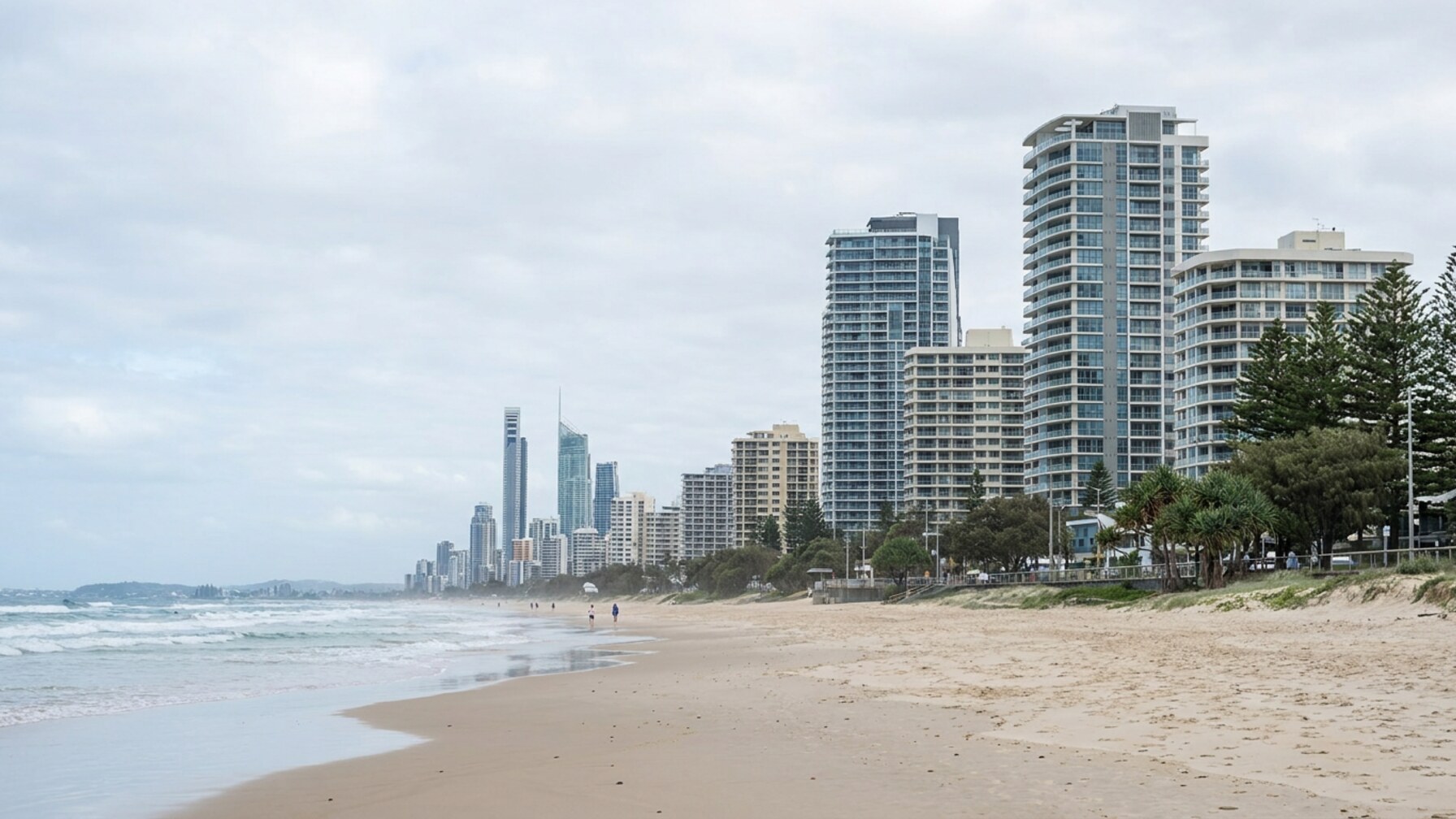
Gold Coast City Council is accelerating its review of short-term rental registration requirements, with council officers confirming the process is tied to a broader state government push to clean up duplicate and misleading accommodation listings that have distorted the local rental market. The review comes as Queensland's Short-Term Rental Accommodation framework, introduced under state legislation in 2023, moves toward a compulsory registration phase that would make every listed property traceable to a verified owner.
The timing matters. The 2032 Brisbane Olympic Games will bring significant accommodation pressure to venues at Coomera Arena and Coomera Indoor Sports Centre, as well as Robina Stadium, both of which sit within the Gold Coast boundary. Council planners are acutely aware that a bed-count based on duplicated or ghost listings gives an entirely fictional picture of what the city can actually house during Games periods. Getting the data clean now, six years out, is the only way to plan infrastructure and transport around realistic numbers.
What Duplicate Listings Actually Cost Renters
The problem is not abstract. Duplicate listings, where the same property appears multiple times across platforms, sometimes with different photos, prices or availability windows, inflate apparent supply while suppressing genuine vacancy. A renter searching for a unit near Chevron Island or in the Broadbeach Waters canal estate may scroll past what appears to be a dozen options, only to find on inquiry that several resolve to the same address.
National housing data published by CoreLogic in early 2026 found that the Gold Coast had one of the highest concentrations of short-term rental listings per capita of any Queensland local government area, with Surfers Paradise and Broadbeach postcodes registering particularly dense clusters. That density, combined with weak verification requirements until now, created fertile ground for duplicate entries. On Airbnb alone, independent audits conducted in comparable tourist cities have found duplication rates of between four and nine per cent of total listings, though no Gold Coast-specific audit figure has been made public by Council or the Queensland Department of Housing.
Barcelona's city government moved hardest. In November 2024, Barcelona's mayor announced the city would not renew any of its roughly 10,000 short-term rental licences when they expired in 2028, effectively phasing out the sector in residential zones. Amsterdam took a different path, capping rentals at 30 nights per year per property and requiring hosts to register with a unique permit number that must appear in every listing, making duplicates immediately detectable by enforcement algorithms. Byron Bay, under New South Wales law, has operated a mandatory registration scheme since January 2024 that assigns each property a unique identification number tied to a council record.
Gold Coast's Registration Push and What Comes Next
Queensland's framework stops short of Barcelona's outright phase-out and is less prescriptive than Amsterdam's nightly cap. The state's plan centres on a property-level registration number that hosts must display on all listings across all platforms. That single change, if enforced, would make duplicate listings structurally impossible, two listings cannot legitimately share one registration number, and a second number for the same address would fail the title deed verification step.
Council's planning department has flagged Orchid Avenue and the Chevron Renaissance precinct in Surfers Paradise, along with the Oracle towers on Broadbeach Mall, as priority areas for audit once the registration database goes live. These are precincts where the density of listings relative to the known number of dwellings has consistently appeared anomalous in council's own data matching exercises.
For property owners, the practical advice is straightforward: consolidate listings to a single entry per platform per property before the registration deadline, which Queensland Housing is expected to gazette in the second half of 2026. Owners with multiple listings for the same address, sometimes created inadvertently when a property manager and the owner each list independently, risk enforcement action and delisting once the verification layer is active. Platforms including Airbnb have indicated they will comply with the Queensland scheme, as they already do under similar rules in New South Wales and Victoria. The window to get listings in order is narrower than most hosts currently appreciate.