From Car Culture to Connectivity: How Gold Coast Commuting Is Being Reimagined
As congestion chokes the M1 corridor, the Gold Coast is ditching its car-dependent past for a smarter, greener transport future.
As congestion chokes the M1 corridor, the Gold Coast is ditching its car-dependent past for a smarter, greener transport future.
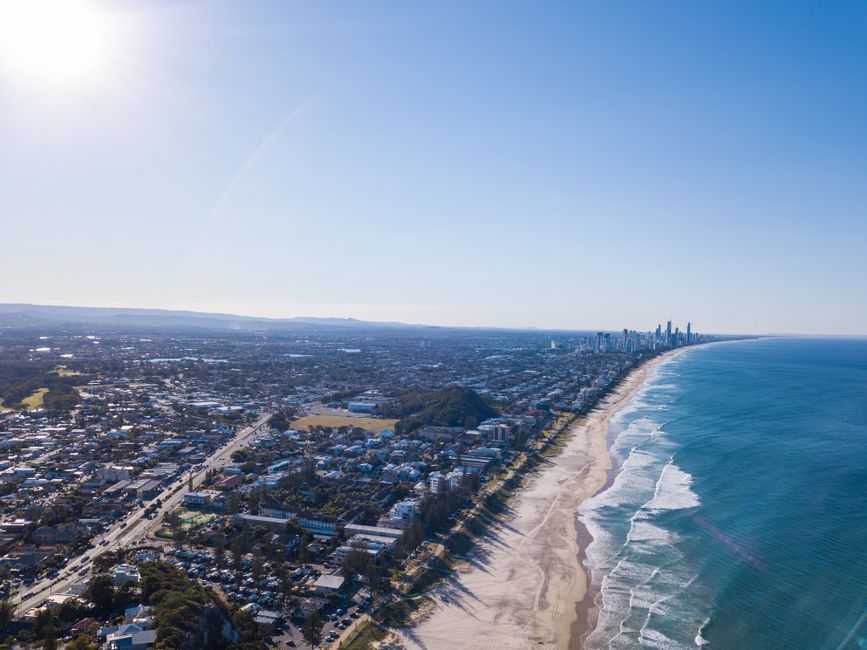
For decades, the Gold Coast's identity has been inseparable from the car. Wide boulevards like the Gold Coast Highway and the sprawling arterial network were built for speed and volume, reflecting a city that grew around the automobile. But that era is quietly ending.
The transformation is visible in pockets across the city. The light rail extension, which now connects Helensvale to Broadbeach, has fundamentally altered commuting patterns along the northern corridor. Residential developments near Southport Station and Griffith University Station are selling faster than comparable properties without transit proximity—a metric that would have seemed irrelevant a decade ago. Transport planners report that weekday patronage on the Gold Coast Light Rail has grown 23% year-on-year, shifting attitudes about public transport viability on the Coast.
Southport's CBD is experiencing a subtle but significant shift. Previously dominated by drive-through convenience, the precinct is now being re-imagined around pedestrian-friendly streetscapes. Broadwater Parklands has become a commuting hub rather than just a leisure destination, with cyclists and walkers now accounting for nearly 18% of morning traffic flows into the business district—compared to just 6% in 2019.
Micro-mobility options have exploded. E-scooter services operate across Surfers Paradise, the Esplanade, and Broadbeach, while cycle lanes are being integrated into previously car-centric routes along Cavill Avenue and The Esplanade. Several major employers, including those clustered around the Southport corporate precinct, now offer subsidised public transport passes and cycle-to-work programs.
The shift isn't sentiment-driven alone. Peak-hour congestion on the M1, particularly between Nerang and the Southport offramps, has become prohibitively frustrating for commuters. Journey times have extended by an average of 12 minutes over the past three years during morning rush hours, prompting the Council and State Government to fast-track transport alternatives that were previously considered secondary priorities.
Emerging suburbs like Coomera and Oxenford are being designed around connectivity rather than automobile dependency. New residential estates increasingly feature public transport integration from the ground up, with bus rapid transit corridors under consideration for the western corridor.
This isn't yet a car-free city—the Gold Coast remains geographically dispersed and vehicle-dependent for many. But the conversation around mobility is shifting. Transport, once seen purely through the lens of road capacity, is now understood as a crucial factor in liveability, sustainability, and economic competitiveness. The Gold Coast's commuting future is being written right now.
This article was compiled by AI from the sources linked above and screened before publishing. See our editorial standards.
Spread the word
About this article
Published by The Daily Gold Coast
Daily brief
Free, in your inbox before 7am. Weekdays.
More from Gold Coast