Gold Coast Council Spends $847M: Where Your Rates Go
Infrastructure and services breakdown reveals how council allocates budget across city priorities and future planning.
Infrastructure and services breakdown reveals how council allocates budget across city priorities and future planning.
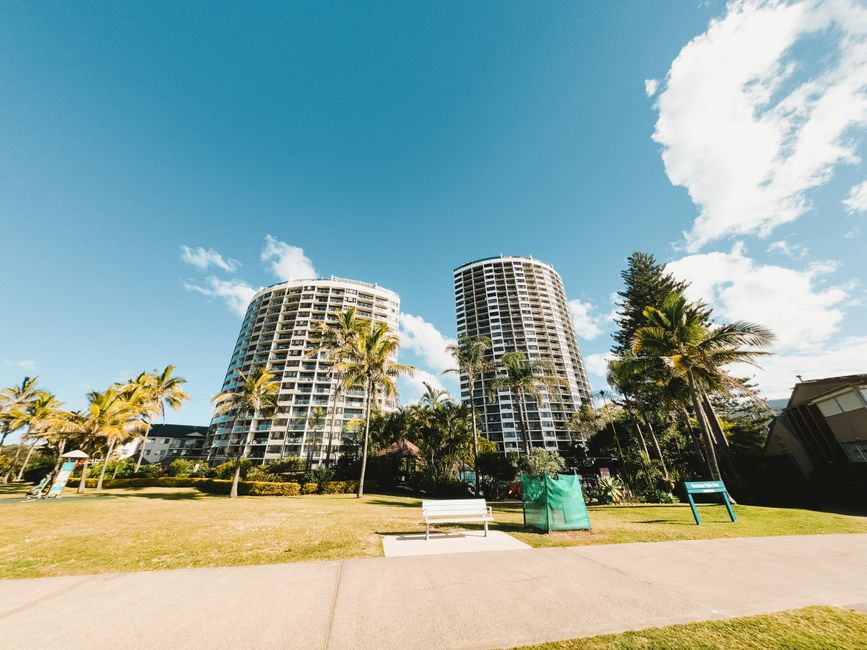
Gold Coast City Council's 2026–27 budget tells a story that goes beyond headlines and political announcements. The numbers—increasingly the true measure of any council's priorities—reveal a city grappling with growth, aging infrastructure, and the cost of managing one of Australia's fastest-expanding regions.
The council's $847 million operational budget represents a 4.2 per cent increase on last year, with rates rising an average of 3.8 per cent for ratepayers across the Surfers Paradise, Southport and Broadbeach precincts—neighbourhoods that collectively account for nearly 28 per cent of the city's assessed property values. That's roughly an additional $165 per annum for the median residential property valued at $650,000.
Infrastructure spending tells the most compelling story. The capital works program allocates $312 million across roads, stormwater and community facilities—a figure that sounds substantial until you consider the Gold Coast's 672-square-kilometre footprint and ageing arterial networks. The Southport to Ashmore corridor alone requires $47 million in planned upgrades, reflecting data showing congestion costs the city approximately $1.2 billion annually in lost productivity.
Waste management and environmental services consume $156 million—a 6.1 per cent jump driven by waste volumes that have grown 8.3 per cent over five years. The council now manages 387,000 tonnes of household waste annually, with landfill capacity projections indicating current sites will reach practical saturation within 14 years without intervention.
What's particularly revealing is where cuts occurred. Planning and development services face a 2.1 per cent reduction despite the city approving 2,847 development applications last financial year—the highest on record. Parks and recreation budgets remained flat at $89 million, even as population grew by 12,500 residents, suggesting fewer resources per capita for Tallebudgera Valley parks and beachfront amenities.
Staffing numbers paint another picture: the council employed 4,156 full-time equivalent positions in 2026, a modest 1.3 per cent increase from 2025, despite taking on expanding services across aging care coordination and community health programs. That's roughly one council employee per 570 residents—comparable to Australian peer cities but below international benchmarks.
The data suggests a council stretched between competing demands. Demographics show the median age of Gold Coast residents reached 42.1 years last year—nine years above the national average—placing acute pressure on aged services and mobility infrastructure. Simultaneously, younger families continue relocating inland toward suburbs like Coomera and Nerang, where 1,432 new residential lots entered the market in 2025.
These aren't political arguments—they're statistical realities that will shape the Gold Coast over the next decade.
This article was compiled by AI from the sources linked above and screened before publishing. See our editorial standards.
Spread the word
About this article
Published by The Daily Gold Coast
Daily brief
Free, in your inbox before 7am. Weekdays.
More from Gold Coast