Gold Coast Property Investors Face Structural Headwinds Despite Record Prices
Record bullion prices and a surging ASX mask a set of structural headwinds that are squeezing the city's property investors, retirees and small businesses simultaneously.
Record bullion prices and a surging ASX mask a set of structural headwinds that are squeezing the city's property investors, retirees and small businesses simultaneously.
Gold hit $US4,187 an ounce on Friday, a 4.1 per cent single-session surge that will catch the eye of every self-funded retiree scanning their SMSF statement on the long weekend. The ASX 200 climbed 0.92 per cent to 8,844, the All Ordinaries rose to 9,048, and Wall Street posted its strongest session in months, with the S&P 500 up 1.71 per cent to 7,483 and the Nasdaq adding 1.87 per cent to close at 25,833. On the surface, it reads like a fine Friday for Gold Coast wealth. Dig below the tape, and 2026 is proving considerably more complicated than that.
The Australian dollar strengthened to US69.43 cents, up 0.68 per cent, which cuts both ways for the city's large cohort of retirees holding offshore equities or US-denominated gold ETFs. A stronger currency trims those gains when converted back to Australian dollars, a mechanical drag that tends to go unnoticed until the quarterly super statement lands. Bitcoin jumped 6.74 per cent to $US62,508, attracting attention but remaining well off the peaks that tempted some local investors into the asset class over the past two years, and WTI crude fell 2.78 per cent to $US68.78 a barrel, easing fuel costs but signalling softer global demand expectations that will eventually filter through to tourism spending on the Coast.
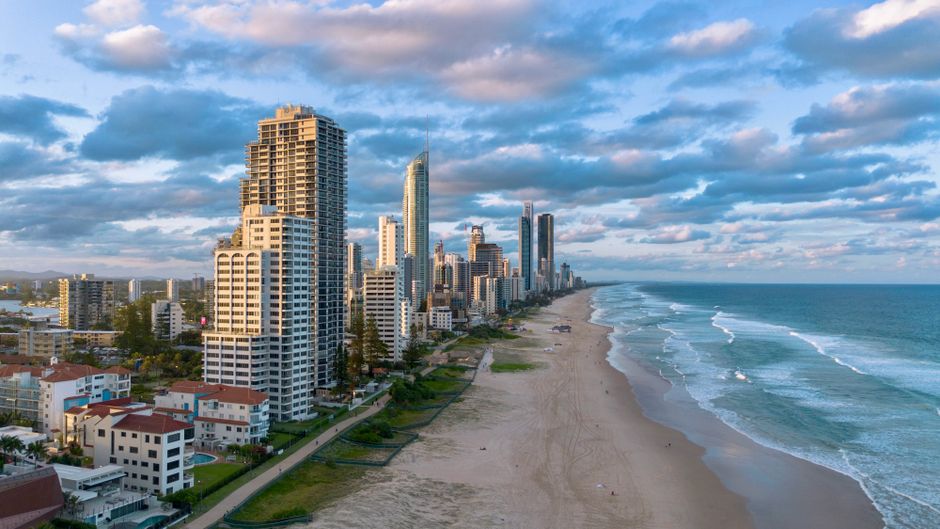
The most pressing story for Gold Coast residents is not in the commodity markets. Investor withdrawal from Australian residential property, accelerating sharply after recent state budget measures and sustained high borrowing costs, is beginning to show up in Queensland data as well. Clearance rates and vendor confidence, already fragile in Melbourne, are drifting lower in southeast Queensland markets that had previously held firm on the strength of interstate migration. First-home buyers, facing serviceability buffers still calibrated around rates that rose sharply from 2022, are not stepping in to fill the gap. The result is a softening bid at the middle of the Gold Coast market, even as prestige waterfront stock retains its premium.
For the city's substantial base of property investors, many of whom hold two or three residential investment properties inside an SMSF structure, the combination of higher land tax assessments, tighter rental yield spreads and a more cautious lending environment is eroding the case that sustained the sector for the best part of a decade. Gross yields on standard three-bedroom units across Southport and Labrador, suburbs that attracted significant investor buying between 2020 and 2023, are under pressure as insurance costs, body corporate fees and interest expenses have all risen faster than rents over the past eighteen months.
The city's small-business community is absorbing its own set of pressures. Tourism numbers, while still positive relative to pre-pandemic baselines, are not accelerating. Domestic leisure travellers are stretching booking windows and trading down on accommodation and dining spend. Hospitality operators along Broadbeach and Surfers Paradise report that average transaction values have plateaued after years of growth, while wage and energy costs continue to climb. The Fair Work Commission's annual minimum wage decision, which took effect on 1 July, added to the labour bill for businesses running thin margins on seasonal staffing models.
There is genuine good news embedded in Friday's session for investors paying attention to the right corners of the market. The gold price surge benefits listed Australian gold producers, several of which have operations or head offices with Gold Coast connections, and the broader materials sector has performed strongly through the first half of 2026. Western Australian gold mining, where community interest has revived around operations including the long-dormant Katanning project near the state's farming belt, represents a legitimate earnings tailwind for the sector. SMSFs with meaningful exposure to ASX-listed gold equities or physical gold ETFs will see that reflected positively in June-quarter returns.
The crude oil decline deserves a separate read. Lower energy prices relieve some cost pressure on the Gold Coast's airline-dependent tourism economy, which relies heavily on Jetstar and Virgin Australia capacity into Gold Coast Airport at Coolangatta. Cheaper jet fuel tends, with a lag, to support route economics and seat capacity decisions. Whether carriers translate that into lower fares or retain the margin is a different question, but the direction of travel is at least constructive for inbound visitor volumes through the second half of the year.
For SMSF trustees reviewing their asset allocation ahead of the new financial year, Friday's session crystallised a theme that has defined 2026: the macro numbers look reassuring, but the local economy is being tested by cost pressures that aggregate indices do not capture. Diversification across gold, domestic equities and cash remains the conventional wisdom from fund managers speaking broadly to the retiree market. The harder truth is that property, the asset class that built much of Gold Coast's private wealth, is giving back ground that took years to accumulate, and the buyers who would normally absorb that supply have, for now, gone elsewhere.
Spread the word
About this article
Published by The Daily Gold Coast
Daily brief
Free, in your inbox before 7am. Weekdays.
More from Gold Coast