Gold Coast Property Markets Face Multiple Headwinds in 2026
From a collapsing investor base to AI infrastructure land grabs, the city's commercial and residential markets are absorbing hits from every direction.
From a collapsing investor base to AI infrastructure land grabs, the city's commercial and residential markets are absorbing hits from every direction.
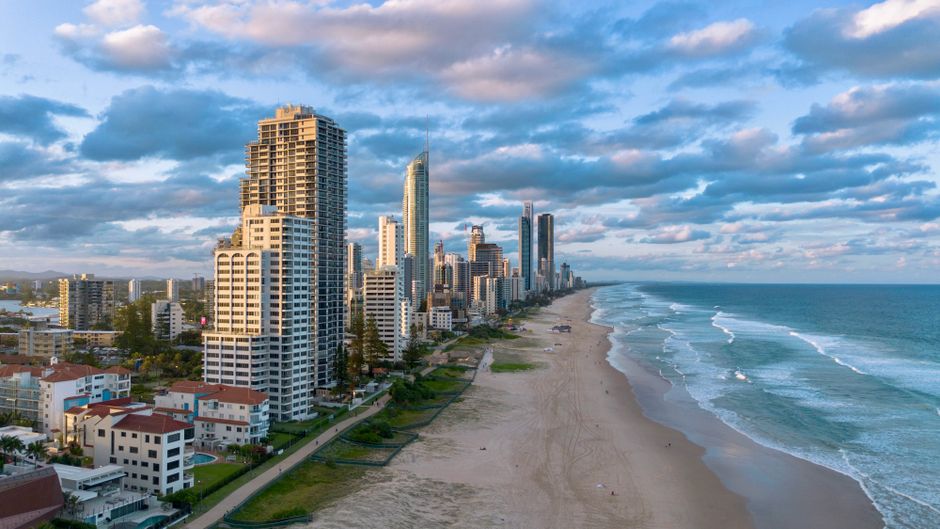
Property clearance rates across the Gold Coast dropped to their lowest mid-year point since 2019 this weekend, as a toxic combination of federal budget fallout, soaring land costs and retreating investors reshapes the outlook for businesses and homeowners alike. The city, long insulated by interstate migration and tourism dollars, is no longer immune.
The pressure is showing up in the numbers and on the ground. Auction clearance rates in the southern end of the market — particularly in Robina and Varsity Lakes — fell to around 52 per cent over the June-July transition period, according to figures circulating among local agents. That compares to clearance rates above 70 per cent for the same fortnight last year. Interstate investors who once snapped up units along Surfers Paradise and Broadbeach as alternatives to Melbourne's overheated market are now sitting on their hands.
The reason this moment matters more than previous downturns is the convergence of pressures. The Albanese government's July budget landed hard on property investors nationally, tightening depreciation schedules and reducing negative gearing benefits on dwellings valued above $1.2 million — a threshold that now captures a substantial chunk of Gold Coast's premium coastal stock. Melbourne's near-total investor exodus, widely reported in the past week, is being watched nervously here as a possible preview.
At the same time, commercial and industrial land on the city's northern fringe — particularly in Yatala and Ormeau, where logistics operators have clustered for a decade — is now facing competition from a new and unexpected rival: AI data centre developers. Nationally, demand for large-footprint, high-power industrial sites has accelerated sharply in 2026, and Gold Coast's proximity to Brisbane's fibre corridors makes its industrial land attractive to tech infrastructure firms. The Gold Coast City Council received at least three planning inquiries in the March quarter alone from data centre proponents, sources familiar with the matter say.
That's a problem for local freight and manufacturing businesses that have relied on affordable land in the M1 corridor. Industrial land in Yatala was trading at roughly $380 per square metre in early 2025. By the June quarter of 2026, comparable sites were attracting offers above $520 per square metre — a 37 per cent jump in 18 months. Small manufacturers and trade businesses are being quietly priced out of areas where they've operated for years.
Meanwhile, the Gold Coast's retail and hospitality core is wrestling with its own headwinds. Foot traffic data compiled by the Surfers Paradise Alliance through May 2026 showed a 9 per cent year-on-year decline in weekday pedestrian counts along Cavill Avenue, even as weekend tourist numbers held relatively steady. The divergence tells a clear story: the business-hours economy — the one that sustains cafes, office supplies, dry-cleaners and professional services — is under more stress than the headline tourism numbers suggest.
There was hope earlier in the year that first home buyers, with access to the federal Help to Buy shared equity scheme that formally launched in February 2026, would compensate for the investor pullback. That hasn't materialised at scale. Nationally, the scheme has been slower to deploy than anticipated, and locally, the $950,000 property price cap under Help to Buy rules excludes most freestanding houses in suburbs like Mermaid Waters, Burleigh Heads or Tugun, where median prices have pushed above that threshold.
The practical upshot for Gold Coast businesses and property holders is straightforward: expect tighter conditions through at least the September quarter. Businesses in the M1 industrial corridor should lock in lease extensions now if they're facing renewal in the next 12 months, before landlords recalibrate rents against inflated land values. Residential vendors in the $900,000–$1.4 million bracket — the sweet spot hit hardest by investor withdrawal — may need to adjust price expectations by 5 to 8 per cent to find genuine buyers. And anyone watching the AI data centre land play would be wise to track what the council's planning committee does with those infrastructure inquiries when they come before the full committee, likely in the August cycle.
Spread the word
About this article
Published by The Daily Gold Coast
Daily brief
Free, in your inbox before 7am. Weekdays.
More from Gold Coast