Gold Coast Office Market Hits Turbulence as Vacancy Climbs and Tenants Demand More for Less
A softening leasing market, rising fitout costs and the AI land-grab are combining to make 2026 a difficult year for commercial landlords on the Gold Coast.
A softening leasing market, rising fitout costs and the AI land-grab are combining to make 2026 a difficult year for commercial landlords on the Gold Coast.
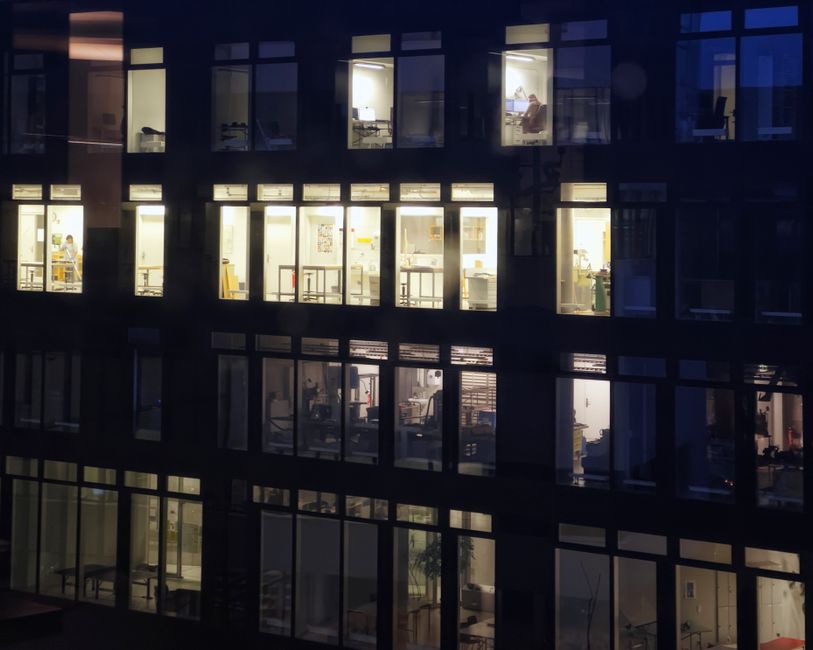
Gold Coast's commercial property sector is nursing a hangover. Office vacancy across the city's core precincts has crept above 14 percent in the first half of 2026, according to figures compiled by Property Council of Australia's Queensland division, putting landlords under pressure not seen since the post-COVID rebound years of 2022 and 2023 unwound faster than most expected.
The timing matters because the Gold Coast is no longer a peripheral market that can shrug off national headwinds. The city recorded $2.1 billion in total commercial transactions in 2025, cementing its status as a significant standalone investment destination. Weakness here now has real consequences for developers, super funds and the thousands of small businesses that lease space from them.
The immediate pressure is concentrated in Southport's central business district, where the stretch of Nerang Street between the Supreme Court and the Gold Coast City Council civic precinct has several whole-floor vacancies sitting unsold since late 2024. Broadbeach — long considered the city's secondary office hub, anchored by Pacific Fair's commercial tower precinct — is faring only marginally better, with a cluster of B-grade stock struggling to attract tenants above $500 per square metre per annum net, a rate that barely covers outgoings for older buildings.
Tenants are not exactly flush, either. Office fitout costs on the Gold Coast have risen roughly 28 percent since 2022, driven by persistent labour shortages in the construction trades and materials costs that never fully retreated after the pandemic surge. A standard commercial fit-out that cost $800 per square metre four years ago is now landing closer to $1,025. That blows out the real cost of a lease commitment significantly, making many businesses reluctant to sign anything longer than three years.
The hybrid work question, which some analysts declared resolved by 2025, has in fact settled into a permanent structural shift rather than a temporary aberration. Major Gold Coast employers — including financial services firms based in the Australia Fair precinct in Southport and several national professional services firms with regional offices in Robina — have consolidated their physical footprints. Some have handed back entire floors. Others are quietly subletting surplus space at discounts of 15 to 20 percent below their headline rents, creating shadow supply that makes the vacancy figures look worse than official data captures.
Complicating the picture nationally is the scramble for industrial land driven by AI data centre development. That competition is redirecting institutional capital toward outer-suburban and peri-urban sites — a trend particularly acute in south-east Queensland — pulling investment attention and development finance away from traditional office projects.
The new calculus for Gold Coast commercial property is conversion, not construction. Several B-grade buildings along Queen Street in Southport have been flagged for residential or mixed-use conversion applications lodged with Gold Coast City Council in the first quarter of 2026. The planning framework under the council's City Plan 2026 allows for such changes in designated urban renewal precincts, and at least two applications were under assessment as of June 30.
Premium-grade assets are holding up better. The recently refurbished tower at 50 Cavill Avenue in Surfers Paradise maintained near-full occupancy through the first half of the year, suggesting flight-to-quality is real and measurable — but it benefits only a narrow slice of the market. Landlords with B and C-grade stock face a harder road.
Leasing agents working the corridor between Robina Town Centre and the Varsity Lakes commercial precinct say incentive packages — rent-free periods, fitout contributions — have stretched back out to levels not seen since 2020. Gross effective rents are, in practical terms, lower than face rents suggest.
For businesses currently hunting for space, the conditions are actually favourable for negotiation. For landlords without deep pockets or an institutional backer, the next 18 months will require genuine creative thinking — on pricing, on lease structure and, increasingly, on what their buildings are actually for.
Spread the word
About this article
Published by The Daily Gold Coast
Daily brief
Free, in your inbox before 7am. Weekdays.
More from Gold Coast


