What the Gold Coast Office Market's Shifting Economics Really Mean for Your Business
Investment dollars are flowing differently across our commercial property landscape—here's what the numbers tell us about where opportunity lies.
Investment dollars are flowing differently across our commercial property landscape—here's what the numbers tell us about where opportunity lies.
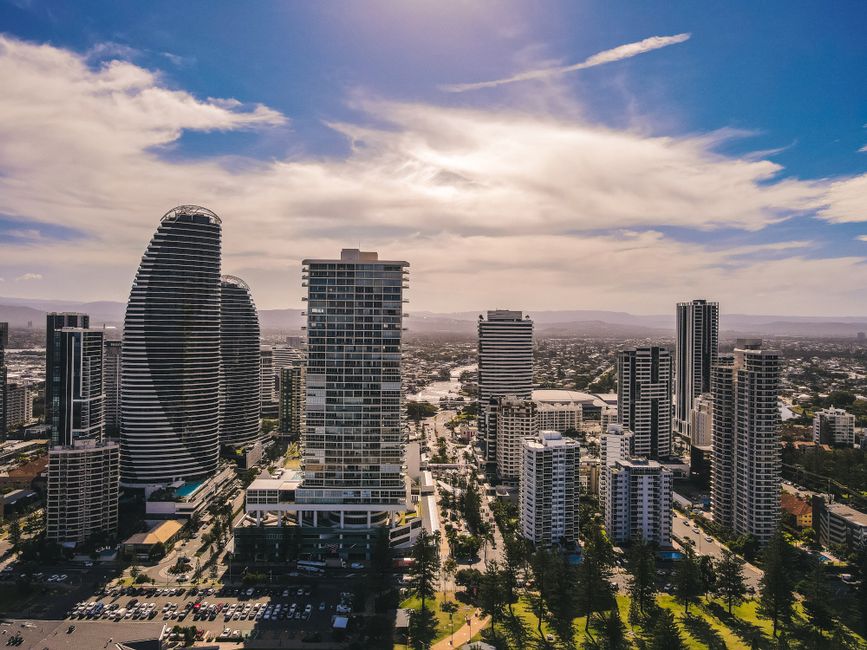
The Gold Coast's commercial property sector is sending mixed signals, and understanding the economic indicators beneath the surface is crucial for investors and business leaders navigating 2026.
Southport's office precinct—traditionally our CBD anchor—is experiencing a recalibration. While prime A-grade office space along the Broadwater corridor commands $450–$550 per square metre annually, vacancy rates have crept toward 12 per cent, up from the historical 8 per cent baseline. This matters because vacancy is an economic bellwether. It reflects both migration patterns and corporate consolidation trends that reshape how capital flows through our region.
The economic story becomes clearer when we track investment flows. Institutional capital—superannuation funds, REITs, and offshore investors—traditionally favoured Surfers Paradise retail and mixed-use precincts. But recent months show a pivot toward suburban office corridors in Ashmore and Nerang, where B-grade space leases at $280–$350 per square metre. Why? Lower debt servicing costs in a higher-interest environment make secondary locations more attractive to yield-conscious investors. That's not weakness; it's capital efficiency reshaping itself.
Interest rate cycles drive everything here. The Reserve Bank's current settings have elevated cap rates (the inverse of property valuations relative to income). A building generating $1 million in annual rental income might have traded for $10 million when cap rates sat at 4 per cent; today, at 6 per cent-plus, comparable assets fetch $7–8 million. For property owners, this feels like decline. For patient capital with long-term horizons, it's opportunity cost recalibrating toward fundamentals.
Construction activity offers another indicator. New office completions in the Broadbeach–Nobby Beach corridor have slowed considerably compared to 2024, with only two major projects currently under way. This supply constraint could eventually tighten availability and stabilise values—but only if demand stabilises first. Corporate leasing inquiries remain soft, influenced by broader economic uncertainty and hybrid work adoption.
The positive signal? Industrial and logistics property—warehouse space servicing e-commerce along the Pacific Motorway corridor—remains robust. Rents are up 6–8 per cent year-on-year, vacancy sits under 5 per cent, and investment yields exceed 5.5 per cent. This reflects real economic activity: goods movement, consumer spending, supply chain proximity to Brisbane and Sydney.
For business owners, the message is pragmatic. Office expansion now requires patience; landlords face genuine headwinds and may offer more flexible terms. But industrial and logistics assets signal where capital sees genuine long-term value. Understanding these flows isn't about predicting markets—it's about recognising where economic gravity is pulling investment dollars, and positioning accordingly.
This article was compiled by AI from the sources linked above and screened before publishing. See our editorial standards.
Spread the word
About this article
Published by The Daily Gold Coast
Daily brief
Free, in your inbox before 7am. Weekdays.
More from Gold Coast